
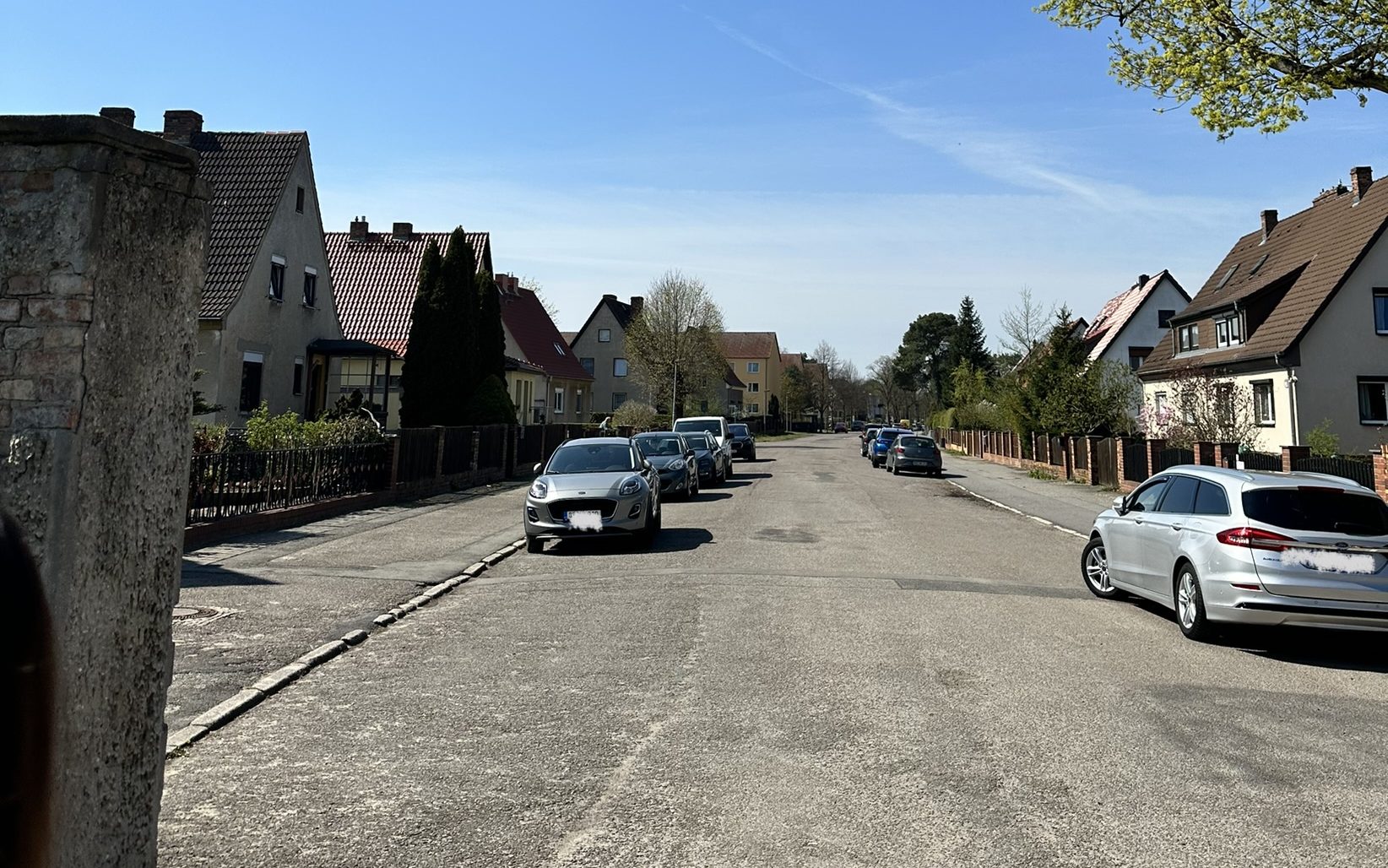
It’s been a day! We toured the Sachsenhausen Concentration Camp today and what an experience this was. Sachsenhausen is located at the outer part of Oranienburg, a town not far outside of Berlin, Germany. Our tour started with meeting at the Traenenpalast (Palace of Tears) Museum which was right beside Friedrichstrasse Station and a hop-skip from our hotel in Berlin, the Meliã Berlin Hotel. We took a train from Friedrichstrasse Station most of the way there which was about 45 minutes or so, and then we had to take a bus the rest of the way due to rail construction which lengthened the trip by about another half hour. Once we arrived at Oranienburg, we walked the same streets to the camp that the prisoners were marched through town on which was about a twenty minute trek. I could not imagine the humiliation felt by prisoners when being marched through town on display for all to see. Many prisoners would have been weary, starving and without proper clothing and I cannot imagine the the anguish when having to march these streets in winter months in cold temperatures. Being from Canada, the thought of a twenty-minute walk in frigid temperatures without proper clothing would have been agony.
Along these streets that the prisoners walked were lined with homes with windows that looked down on the street. If any resident came out in opposition of what was happening or came out to defend a prisoner being beaten, they were taken by SS guards and placed in the back of the line to be marched to the prison camp with the other prisoners for being defiant. Fear was the tactic used to keep people in check – fear of being shamed, fear of beatings, fear of incarceration. As I walked this walk, I wondered how many of them would have protested? or wanted to? How many really knew what was going on (as a lot was hidden from citizens)? The propaganda during this time had people believing truths that weren’t truth at all. The last street of houses that led to the camp belonged to SS guards. It was unnerving to think that prisoners were walked down these streets as a spectacle – some were actually criminals and some were called criminals because of their race, their ideology or religious beliefs – it was a gruelling walk when you think about the thousands of prisoners who met their demise at the end of this walk – by either torment and or death.
The wall to the left, above, is part of one of the original walls of the camp that is seen below.
One of the buildings still standing was the kitchen where food was prepared for SS guards – shown below. Only a certain kind of prisoner could work in this kitchen. Our guide asked us, ‘What kind of prisoners do you think the SS would have trusted to work in the kitchen with knives and other utensils that could have been used against them?’ The answer was Jehovah’s Witnesses. Jehovah’s Witnesses, due to their religious beliefs, were trusted in the camp kitchens with knives and utensils for cooking as they were known for being non-violent and pacifistic and the Nazi regime knew they could trust that they would not try to harm or kill them.
It is against Jehovah’s Witnesses’ religious beliefs to be in military service. They would refuse being drafted into the army and on top of that they would not give the nazi salute. So because they resisted the regime they were arrested and taken to camps like Sachsenhausen.

As we were about to enter, I learned that the part of the camp we were entering into was what was left of the original camp and this is all that was left after the bombing during World War II. The red triangle in the photo below, on far left, shows the original construction of the camp, which is what we were touring, that grew larger over time which is the entire area in the photo. It was built in an isosceles triangle shape with sides about 600 meters long. The shape was so that all corners of the place could be seen clearly from the main building and watchtowers with armed SS guards. This triangular area was about 18 hectares (about 44.5 acres) and due to the large number of prisoners arriving almost daily, they had to expand the camp. This camp grew to about 400 hectares (about 988 acres) to accommodate the thousands of prisoners it held.
The centre photo, below, shows what the original camp layout looked like and the dark black rectangles you see in the photo represent the buildings that are still standing at Sachsenhausen. The greyed out rectangles are where prisoner barracks used to be and in their place are stone plots showing where the buildings once stood. The far right photo is a concrete model map of Sachsenhausen when it occupied about 400 hectares.
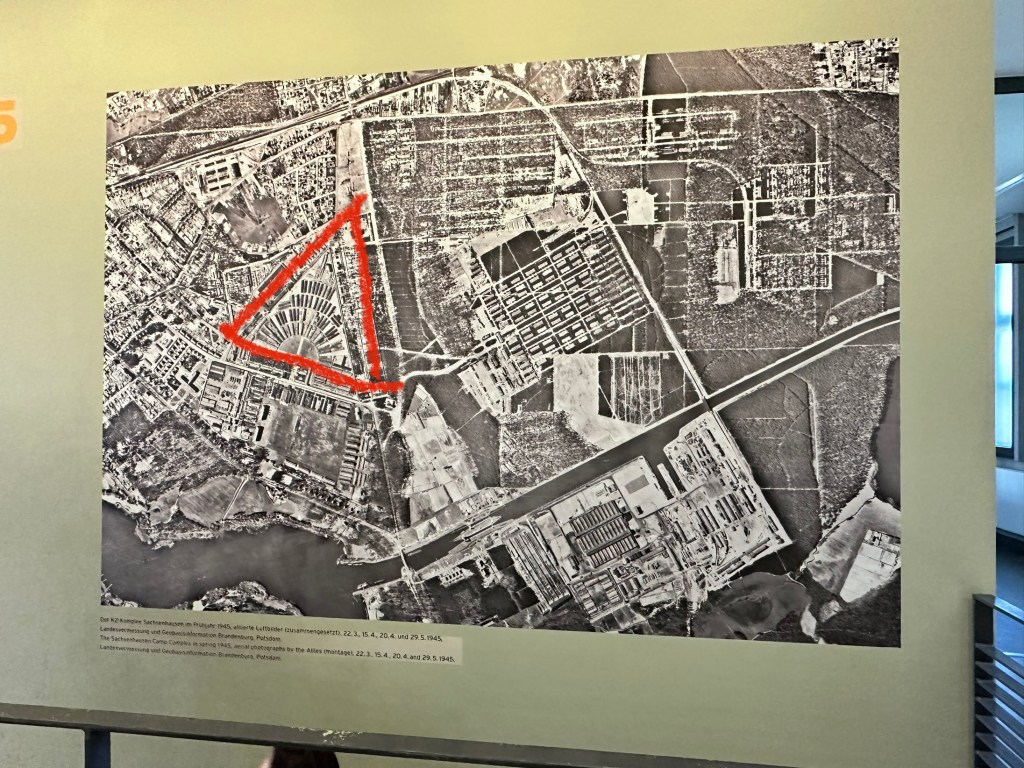
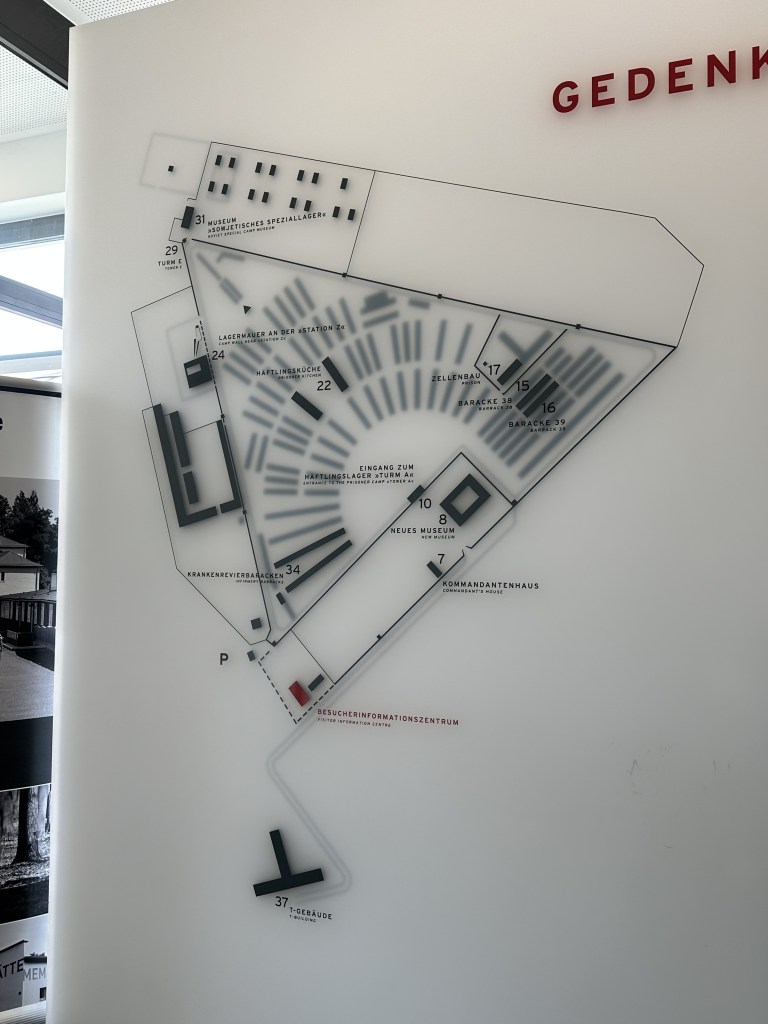
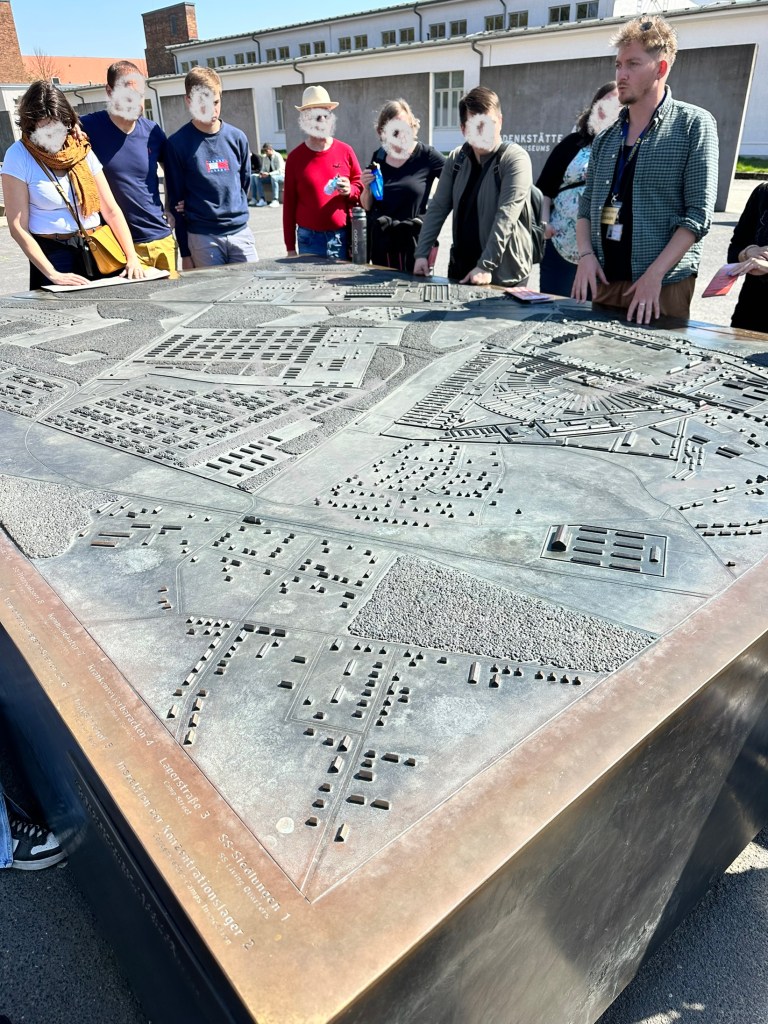
This camp was one of the first in Germany and as other camps were built, Sachsenhausen became the headquarters for all the other concentration camps in Germany. It was also a place of training SS guards.
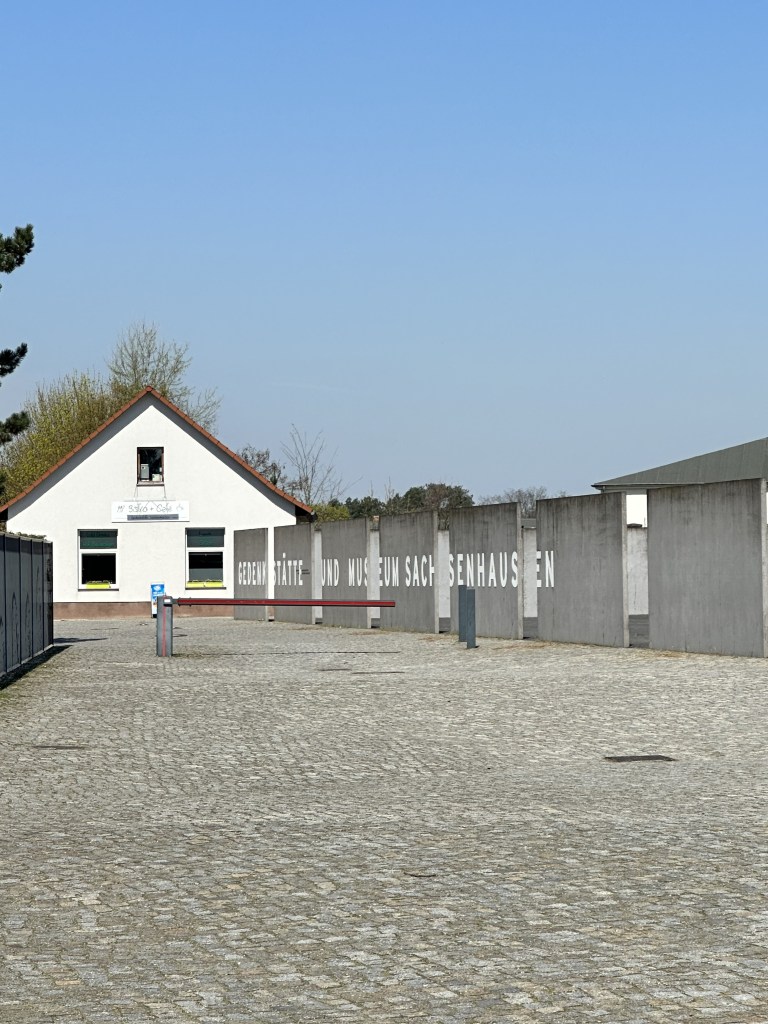

As we approached the main building, called Building A, shown below, which is also the entrance into the camp, you can see the gate ‘Abeit Macht Frei‘ which means, ‘Work makes you free.‘ Prisoners were led to believe that if they worked hard enough that they could earn their freedom out of the camp, which was a lie of course, but they had prisoners working hard in hopes of earning their freedom. SS men would say to arriving prisoners that there is only one way to freedom and it is through this chimney, as they pointed out the chimneys of the crematorium.
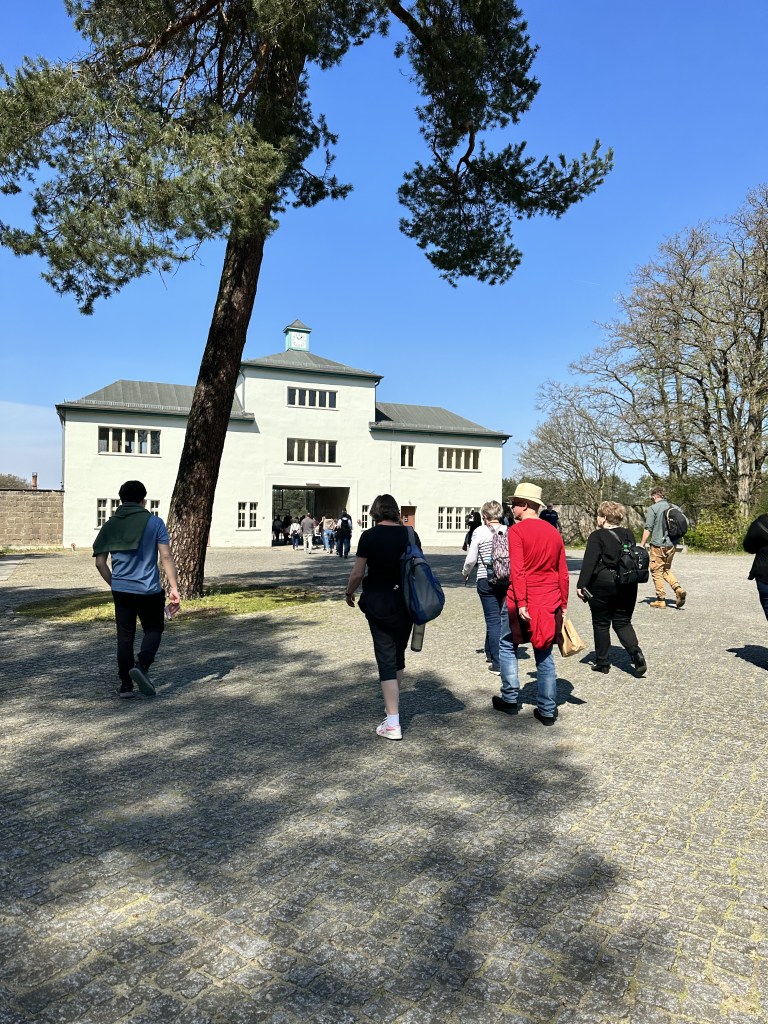
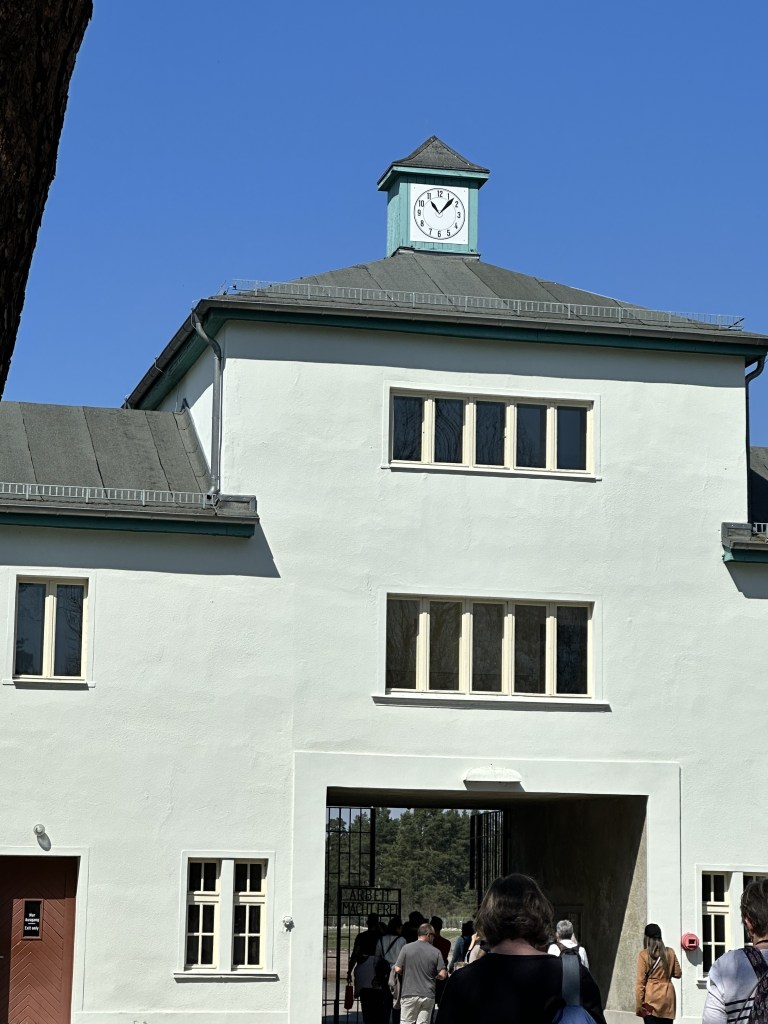
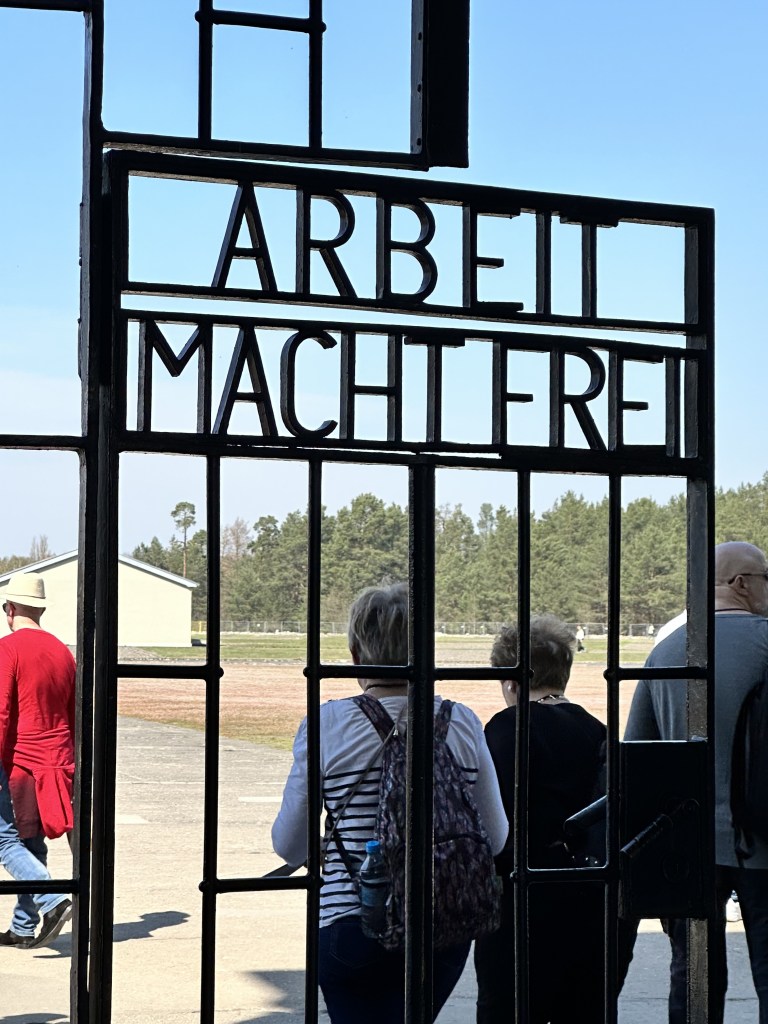
I have to say it was a bit distressing, walking through this gate – to think of how many prisoners walked through it, who endured starvation, humiliation, unbearable punishment, cruelty, medical experiments and death. There were many times I got choked up. When in the museum, that is located in the middle of this camp (which was previously the camp kitchen), so much of the displays were so hard to read that I took screen shots to read later as I did not want to be an emotional mess. It makes a person feel ill thinking about how evil human beings can be and the atrocities that they can carry out on other human beings that they didn’t see as humans worthy of a life.
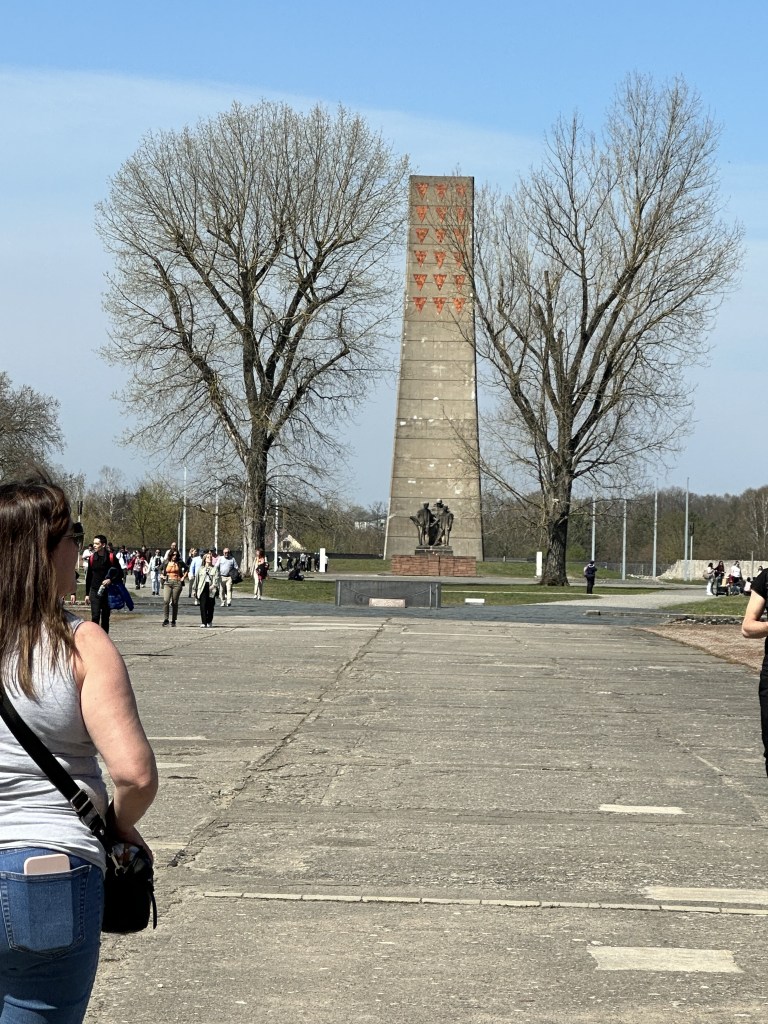
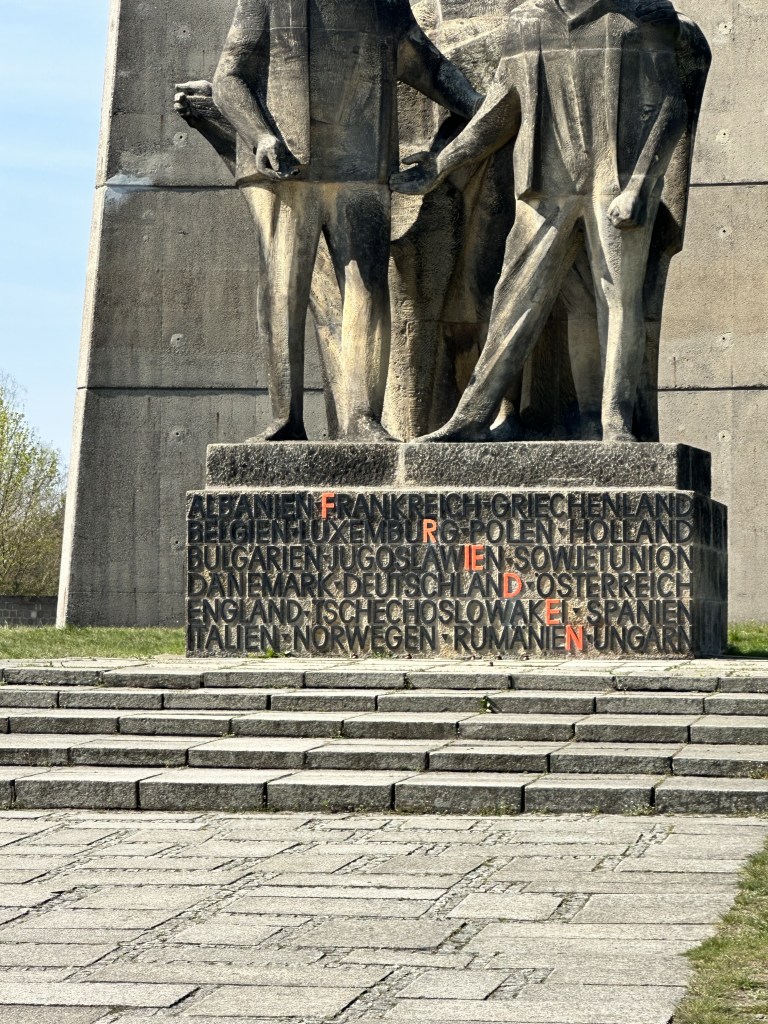
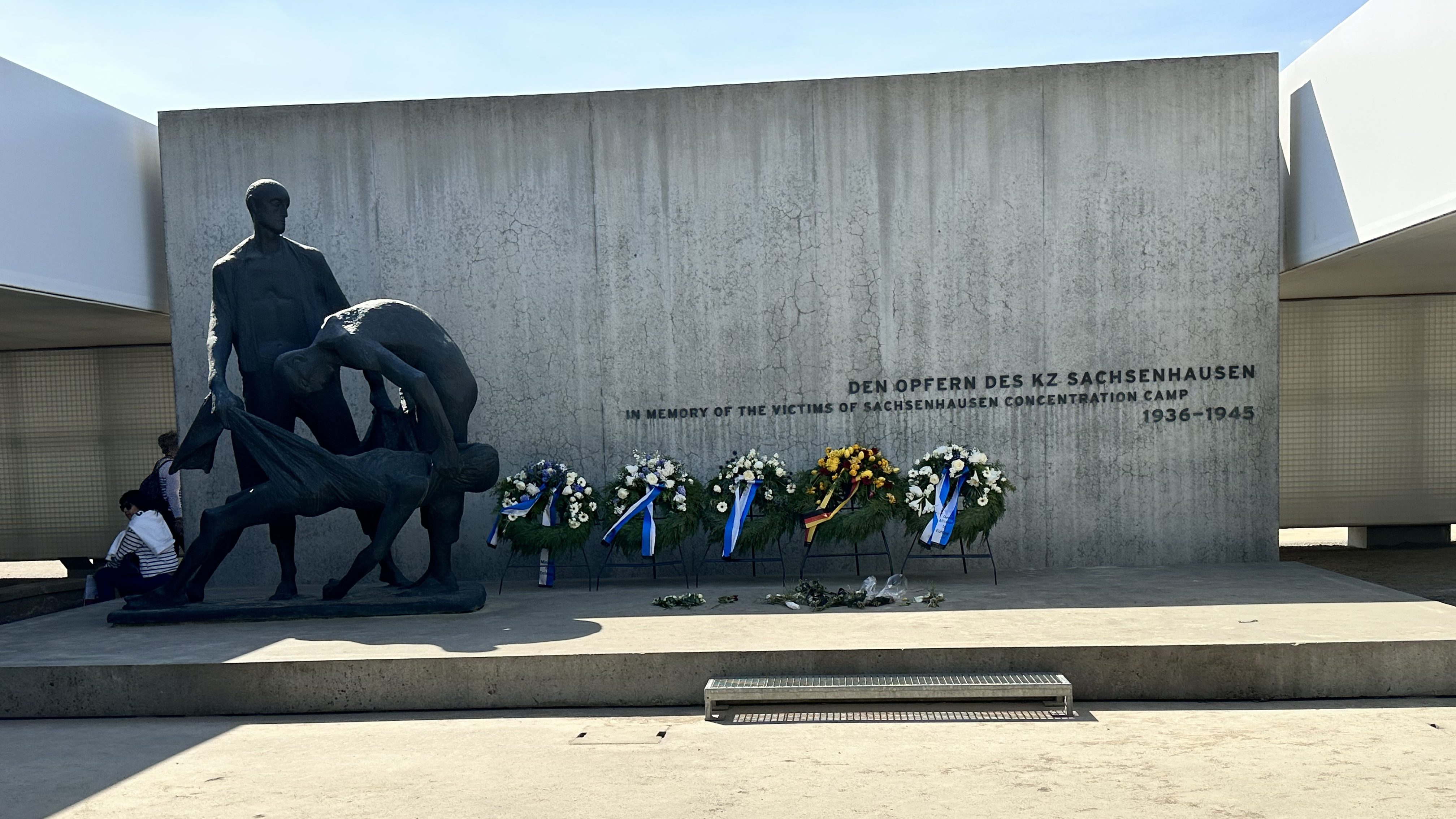
As soon as you go through the gate, you see a huge monument at the other end of the yard – the Sachsenhausen National Memorial (1961). This is a monument in remembrance to those murdered and those later liberated at this camp – see photos below. On the monument, they list 19 countries of origin that were incarcerated here and many of which were later incinerated. Of course, years later, they discovered there were many more nationalities incarcerated here than just the 19 listed on the monument: Albania, France, Greece, Belgium, Luxembourg, Holland, Bulgaria, Yugoslavia, Soviet Union, Denmark, Germany, Austria, England, Czechoslovakia, Spain, Italy, Norway, Romania, and Hungary, respectively. The red triangles at the top of this tower represent 18 nationalities. Triangles were used on prisoner’s clothing to identify their crimes. There were actually about seven different coloured triangles, but on this monument, they chose to use only red. Looking at the base where you see the list of nations, you can see letters painted orange that reads ‘frieden‘ which means, ‘peace‘ which was painted orange only a few years ago.
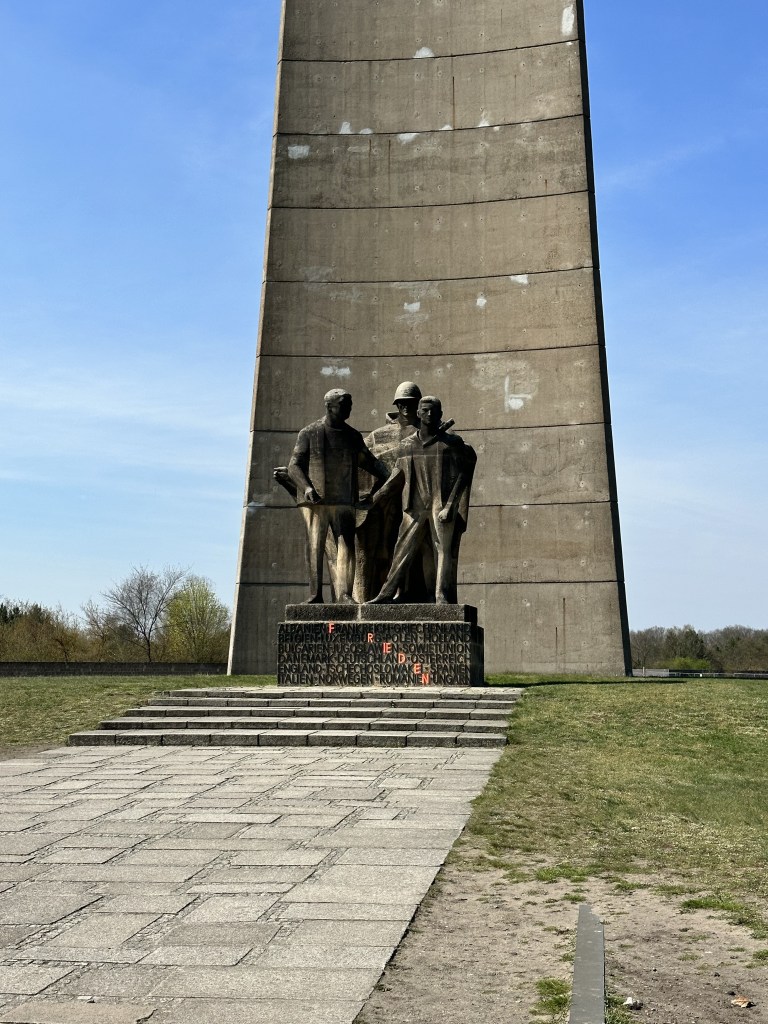
Something else to know about this monument are the three figures – see above middle photo. The artist commissioned for this monument had his draft reviewed multiple times before the work began – I think it was three times before it was approved. The monument shows three persons, in the back I believe represents a Russian soldier, who is liberating two prisoners. The original draft for this monument showed emaciated prisoners who represent those who suffered from malnutrition and brutal cruelty, but those who were approving this monument did not like that the prisoners were seen this way and so what you see here ended up being the final approval for the monument. It makes it hard to know who the prisoners are in this monument as the prisoners remaining would have been quite weak, emaciated and or dying when finally liberated.
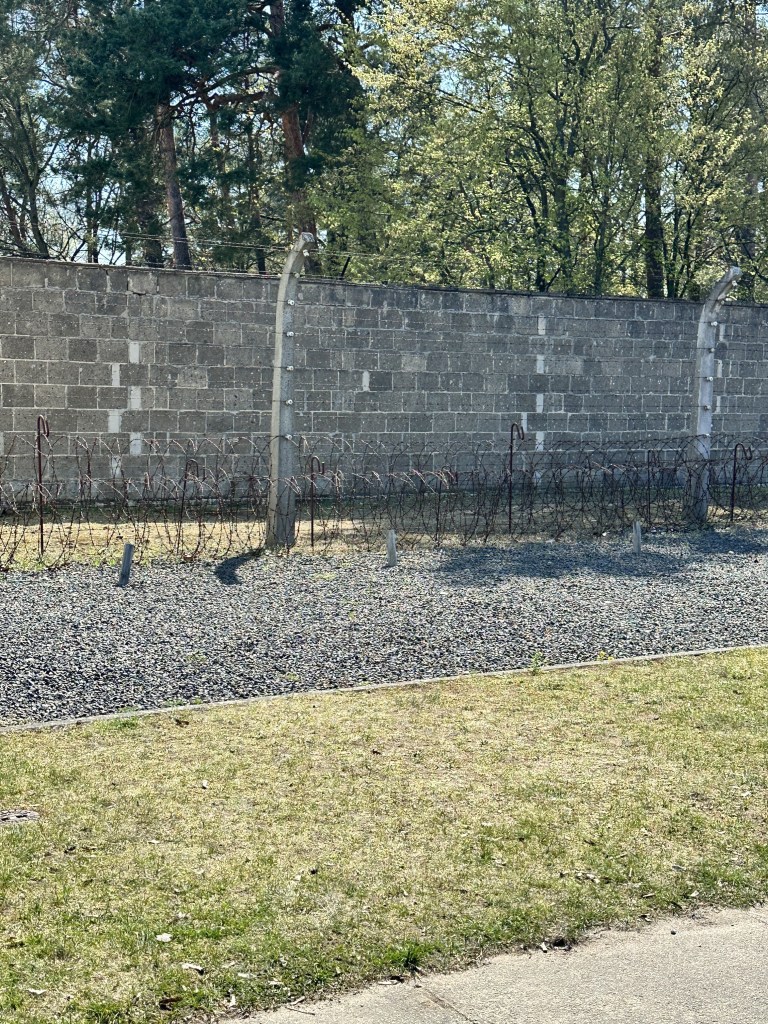
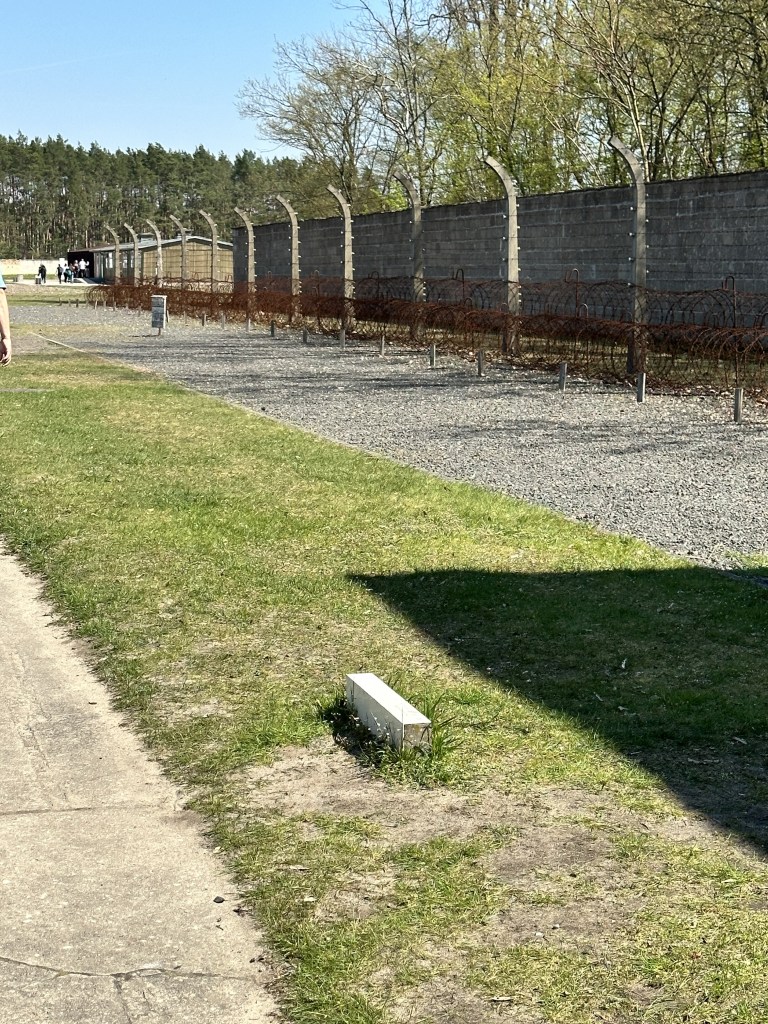
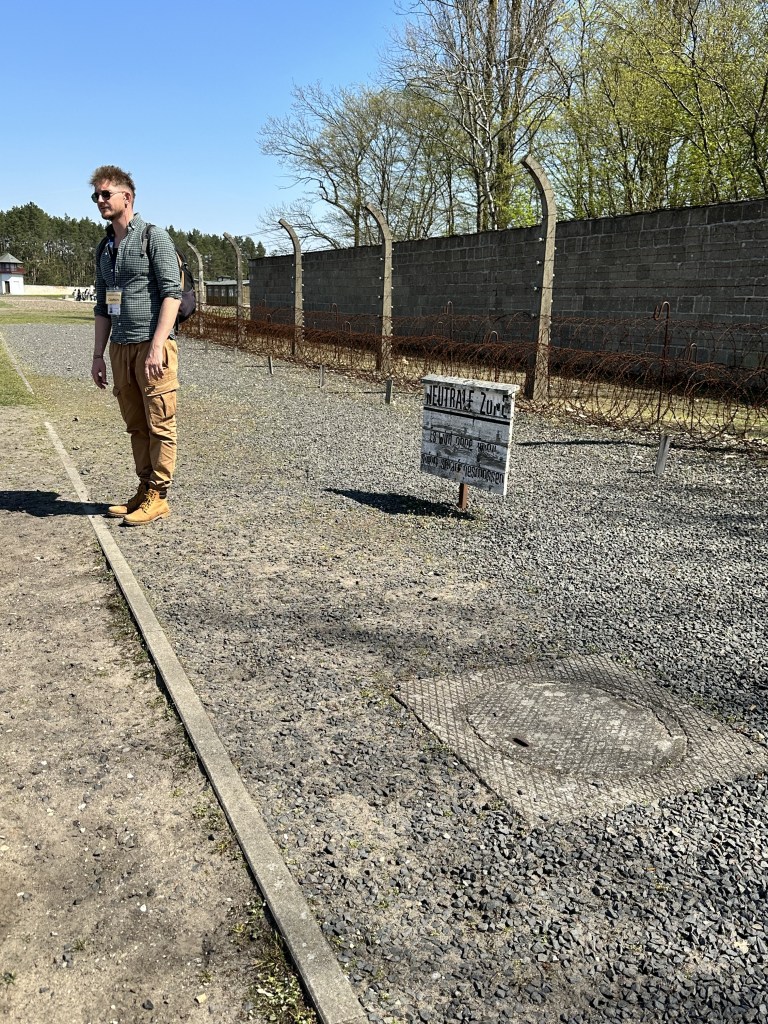
The camp was very well secured to keep prisoners from escaping. Along the walls in the photos below, you can see areas of gravel close to the walls that are lined with barbed wire along the ground in front of the wall. Along the wall, you can see the curved posts with electric wire strung across them with what looks like fuses on the posts. In the photo in the far right was our guide, I included him in the photo to give scale. If any prisoner even came close to where our guide was standing, called the Neutral Zone, the prisoners were shot and killed without hesitation. Beyond these walls were more walls and beyond that, more SS housing, so as you can imagine, escape would have been quite difficult, along with multiple watchtowers with armed soldiers. If a prisoner was caught trying to escape they were killed on the spot.
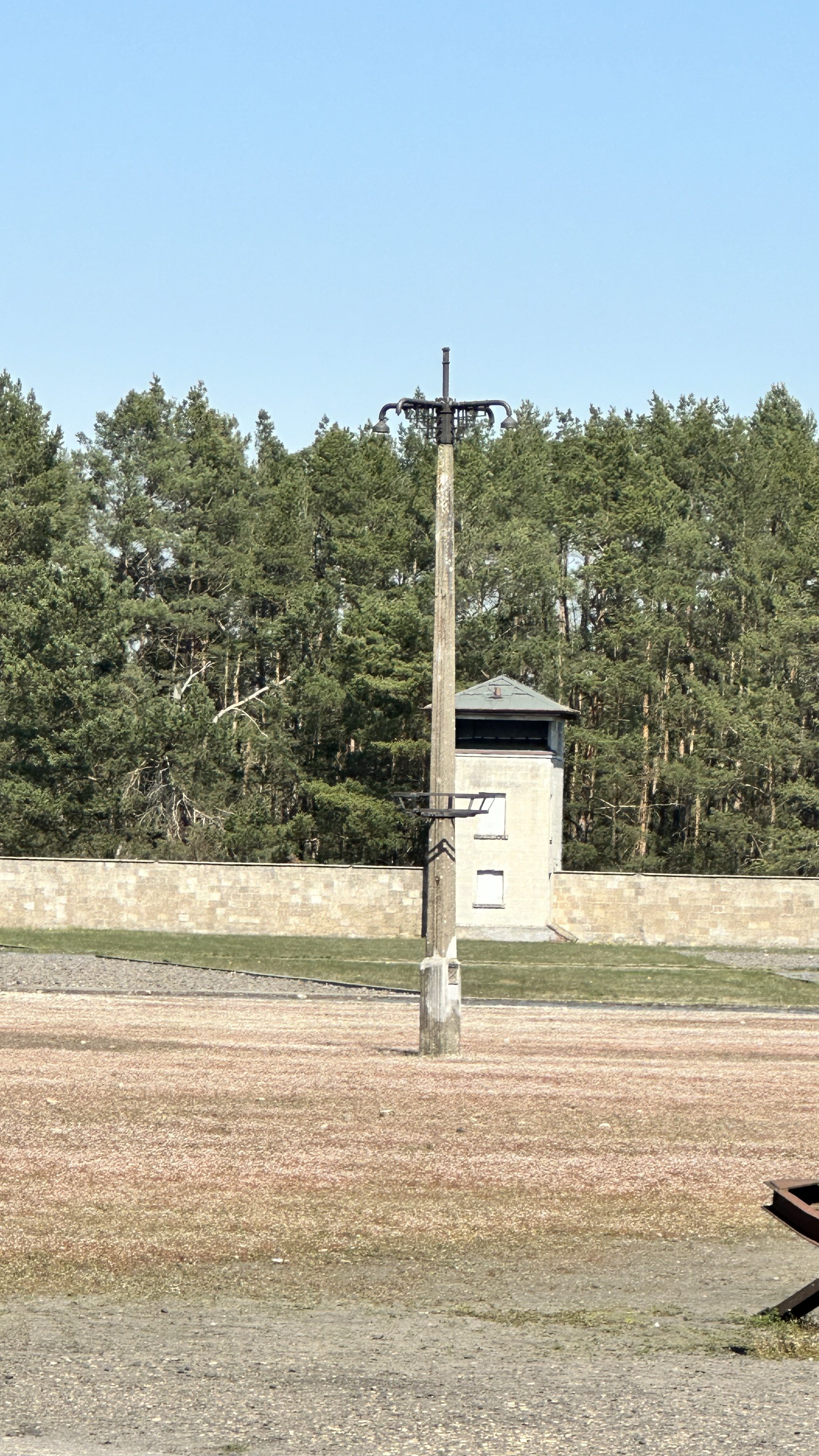
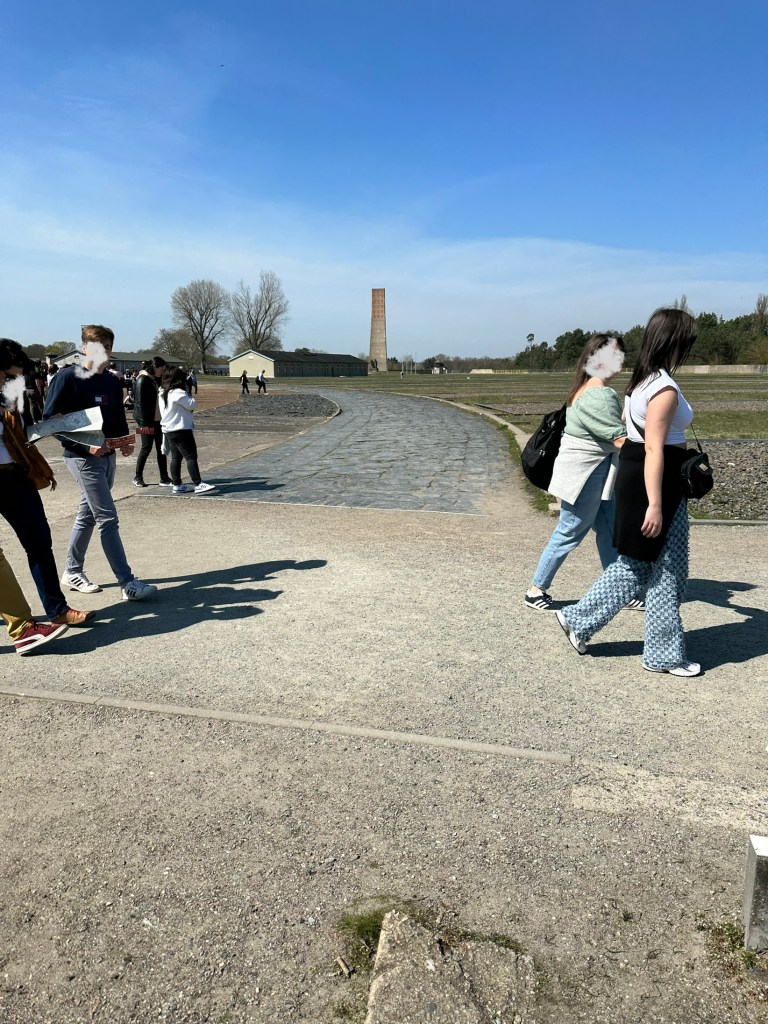
On the left (below) is a pole that would have had speakers attached to them. There were a good many of these poles around the yard and they were used to call prisoners to roll call or to alert of missing prisoners that didn’t show for roll call. About the photo (below-center), this road is where much torture endured, one of which was testing leather shoes for German shoe manufacturers to test the durability of them. The prisoners would be ordered to march around it endlessly until they were told they could stop. This track was made up of different surfaces to test the shoes on different kinds of terrain. However, because the prisoners average weight was around 70 pounds, or about 32kg, the SS guards would add weight to their backs to equal the average weight of a healthy person (see far right photo below). Being underweight, hungry, and weak, marching up and down these surfaces, it would have driven them to utter exhaustion. This started in the summer of 1940. They were forced to run up to 40 kms a day, going at a brisk pace around the 700 meter track and it didn’t matter the season or the weather – rain, snow, frigid cold or extreme heat of summer. If anyone failed to keep up they were beaten by the SS guards. Few prisoners survived this torture after two weeks of it.
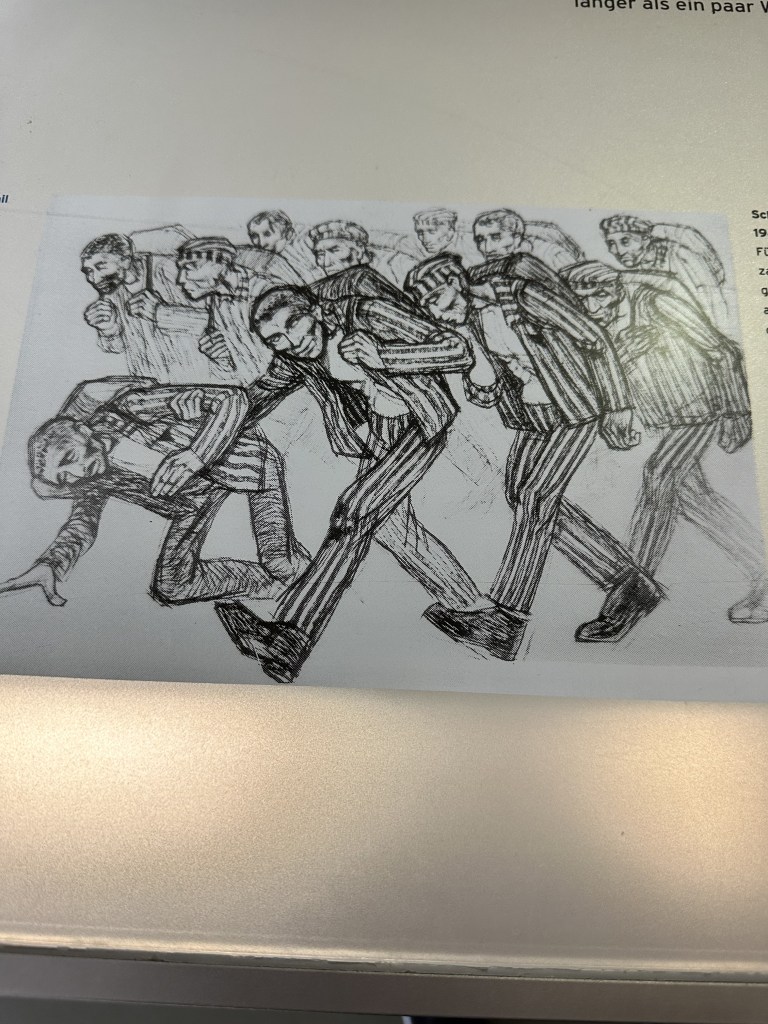
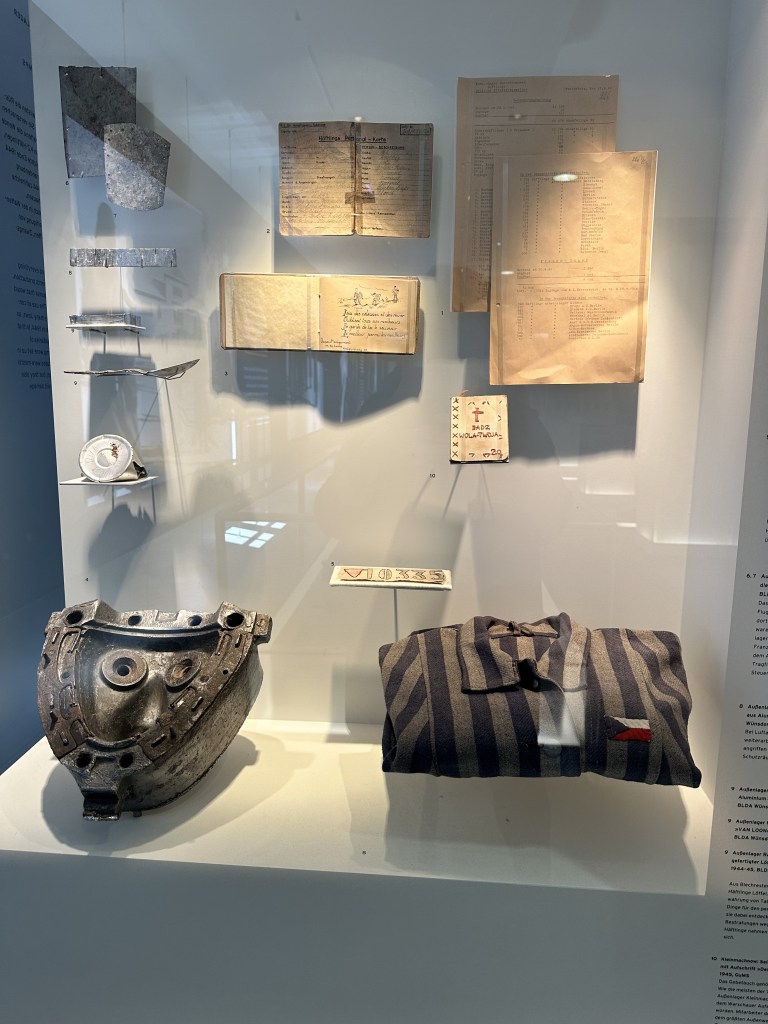
Each prisoner had a number on their prison clothes – they were not known by their names, only their numbers. They were not tattooed at this place like they were at places like Auschwitz. Along with a number, they also had sewn on their clothes a coloured triangle or multiple coloured triangles that revealed their so-called crimes. The Jewish star (or star of David) was also used.
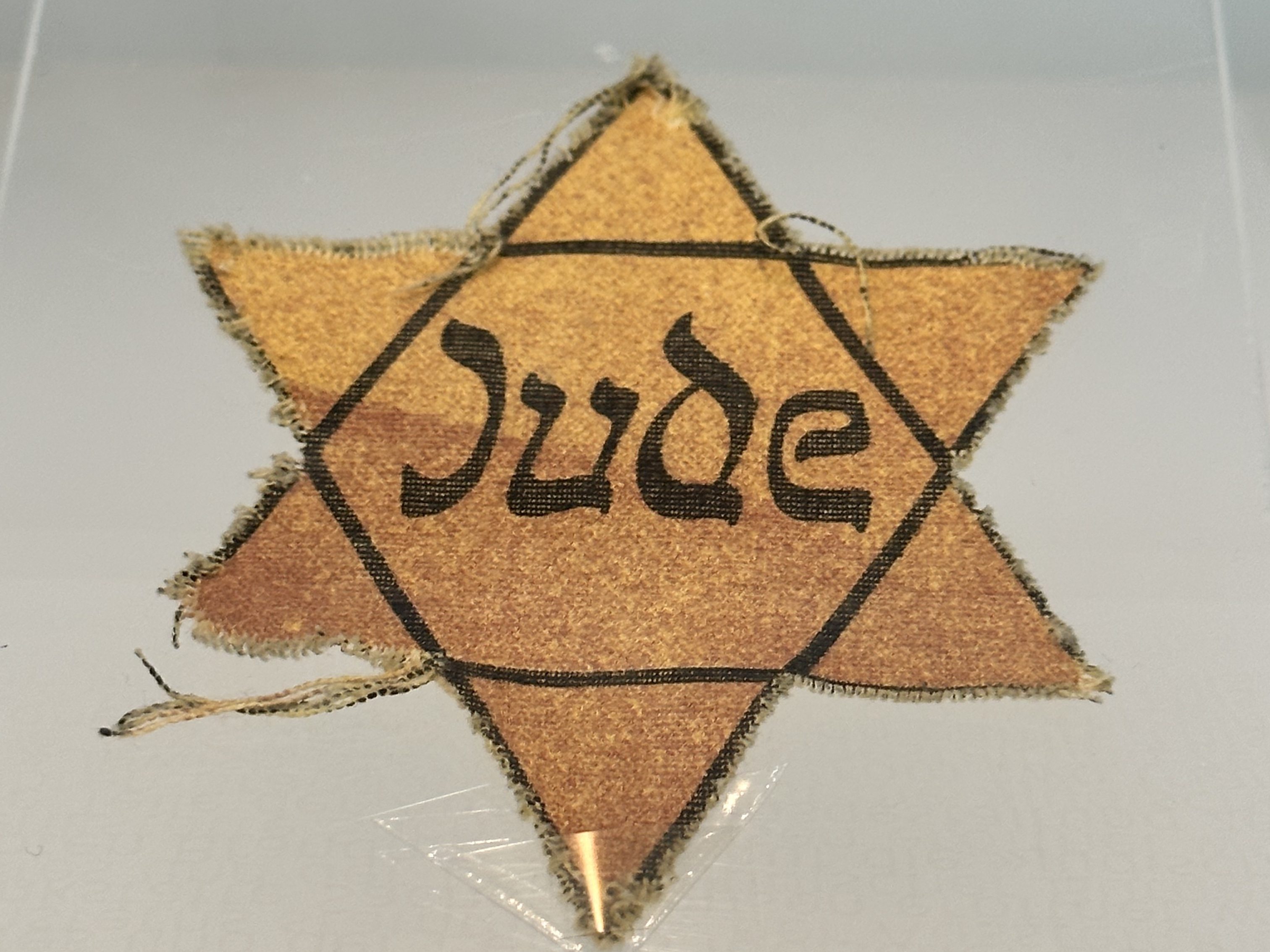
Here is a link to what the different identifying colours of triangles that Nazi Concentration Camp prisoners wore on their prison clothes and what they meant – this same information was also at Sachsenhausen: https://en.wikipedia.org/wiki/Nazi_concentration_camp_badge
Some prisoners could also wear other coloured triangles simultaneously – for instance, if they wore a yellow and red triangle (that would look like a star) it meant you were Jewish and a political prisoner. These badges were the means of shaming and often caused rifts between prisoners. When you check out the link above, it makes sense how it would cause rifts/divisions. The Jewish people were at the very bottom of the prisoner hierarchy and were more brutally treated than the other prisoners. Norwegians were highest in the hierarchy and below them, the Dutch. These triangles were used in German-occupied countries and were introduced in 1938.
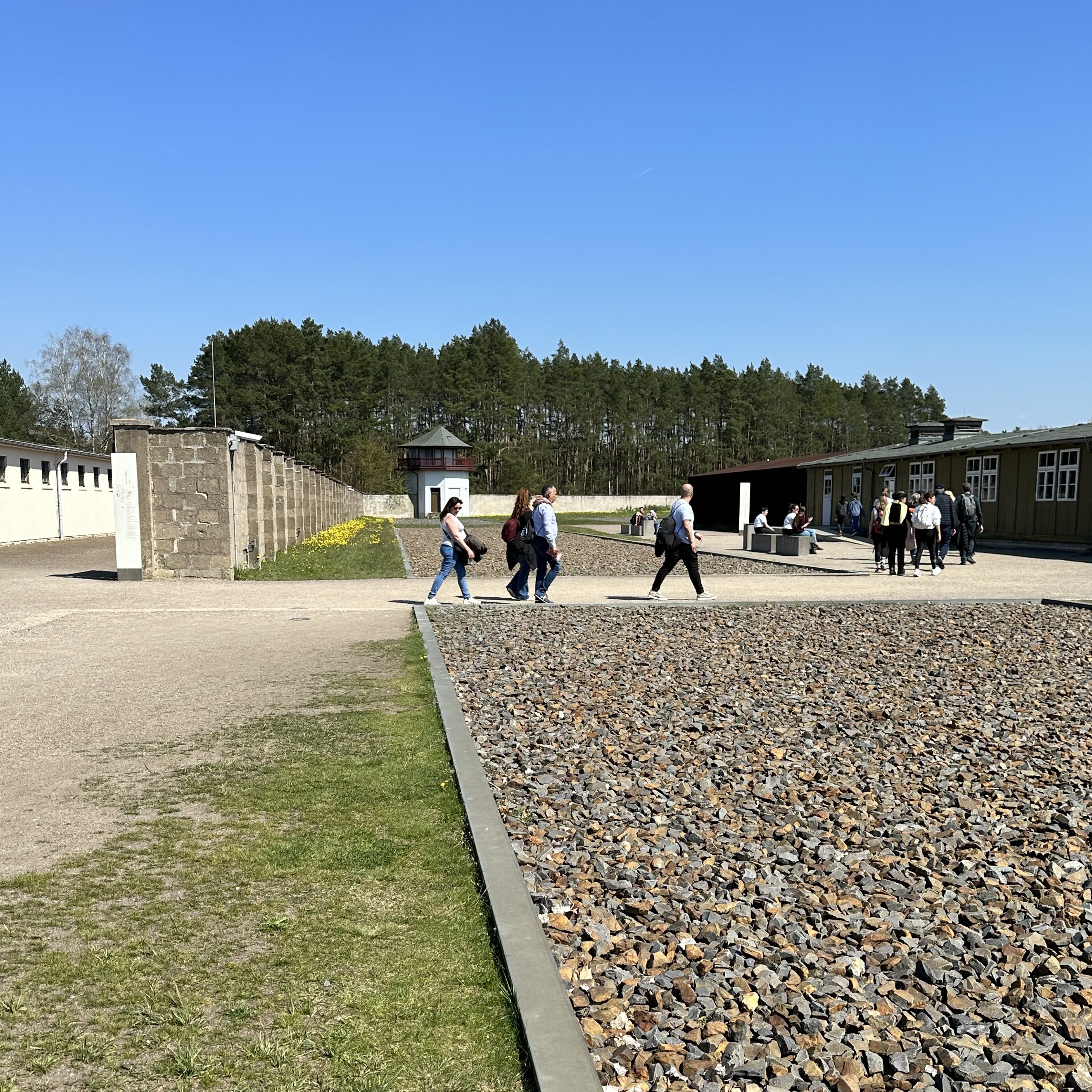
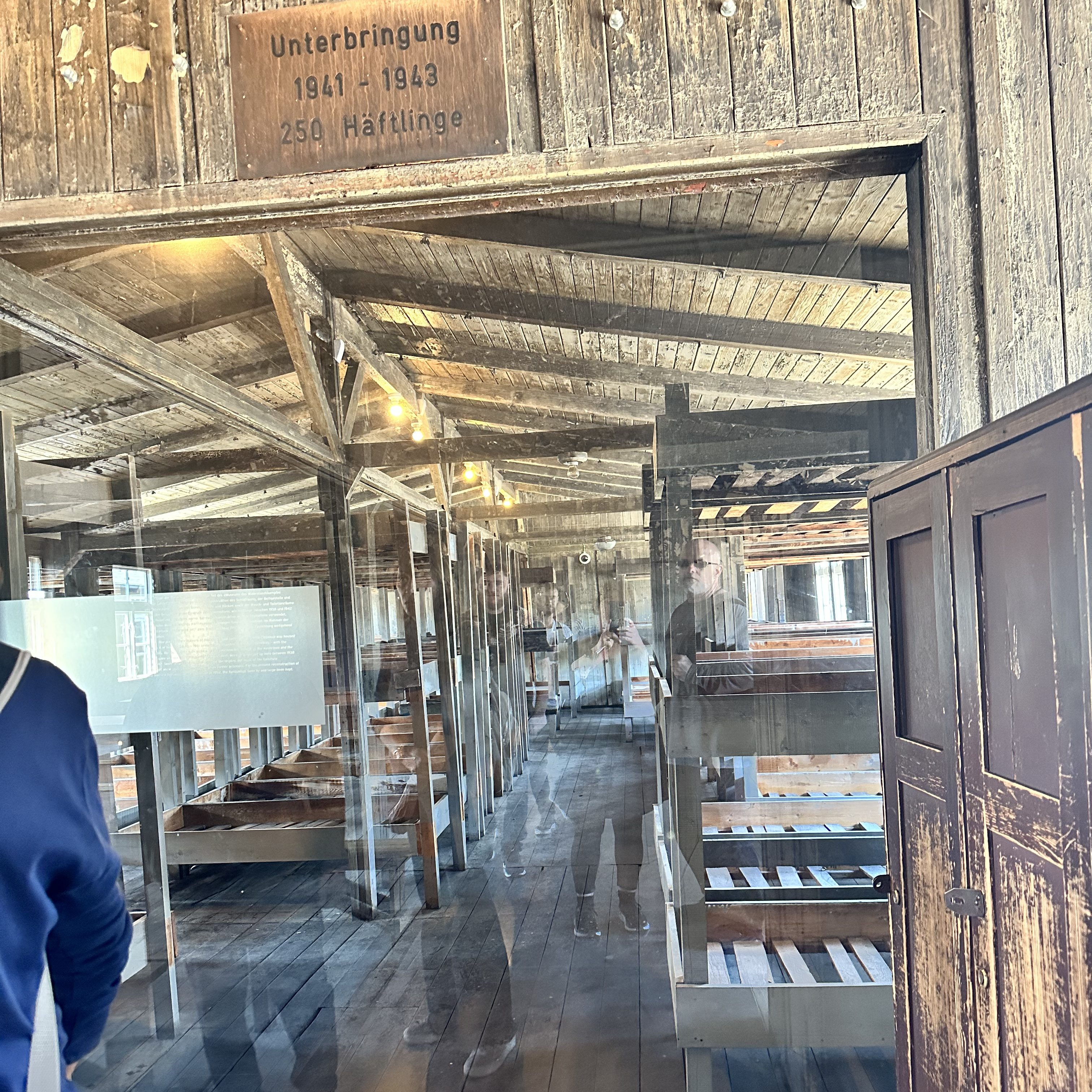
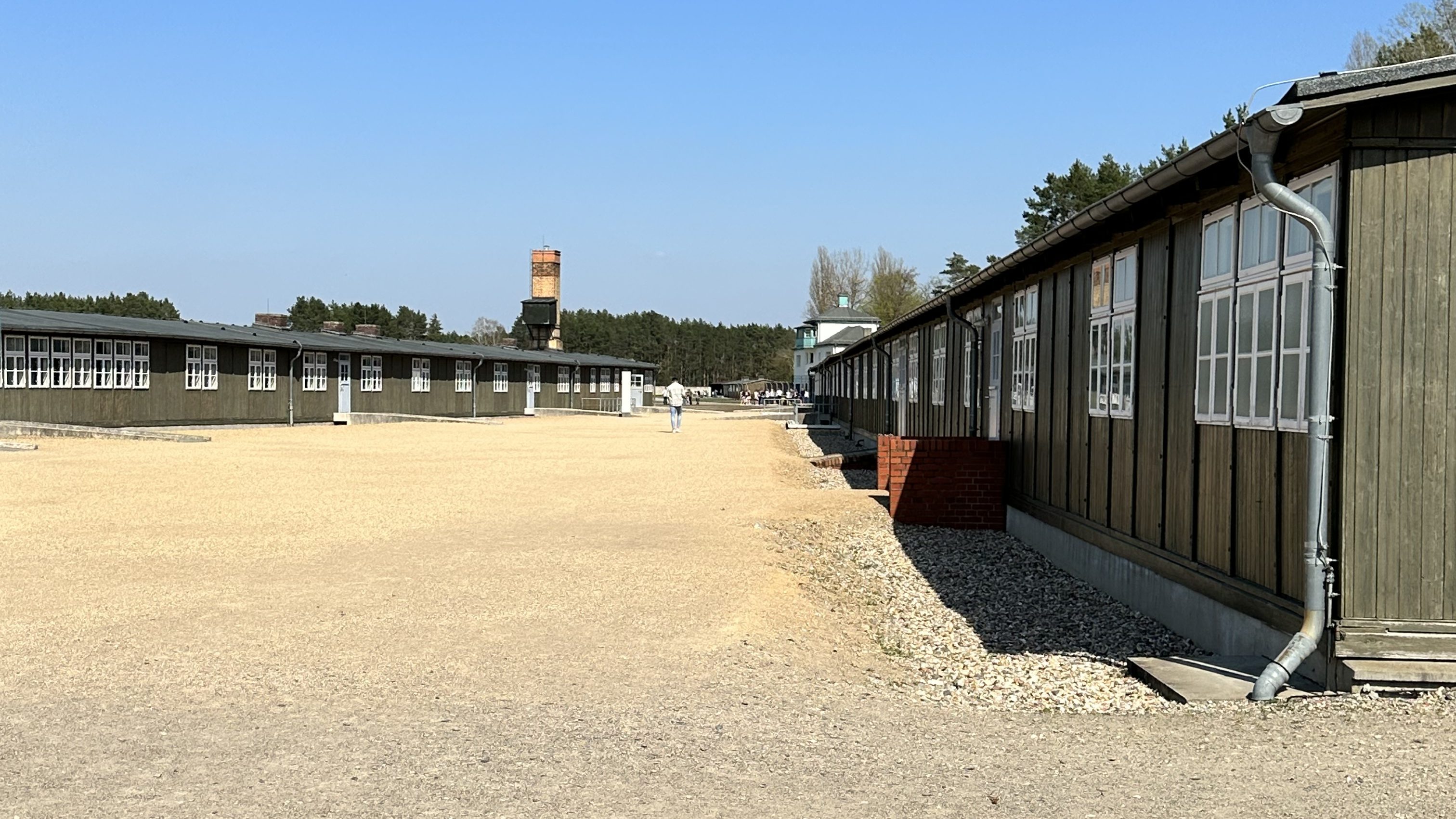
The top left photo – to the left is Barrack 38 and behind that Barrack 39 which were part of the Jewish barracks in this area of the yard. These barracks were typical housing for prisoners. The bunks were three high -right photo – and if a prisoner was sick, like with dysentery for instance, they were on bottom bunks or the floor as no one wanted someone like that sleeping above them. Very often, up to three prisoners would share one bed space – these bed spaces had straw with sheets over top and the blankets had bugs and lice was a problem. Prisoners also slept on the floor if there was no room on the beds. When they woke in the morning, if anyone had died during the night, they were laid on the floor.
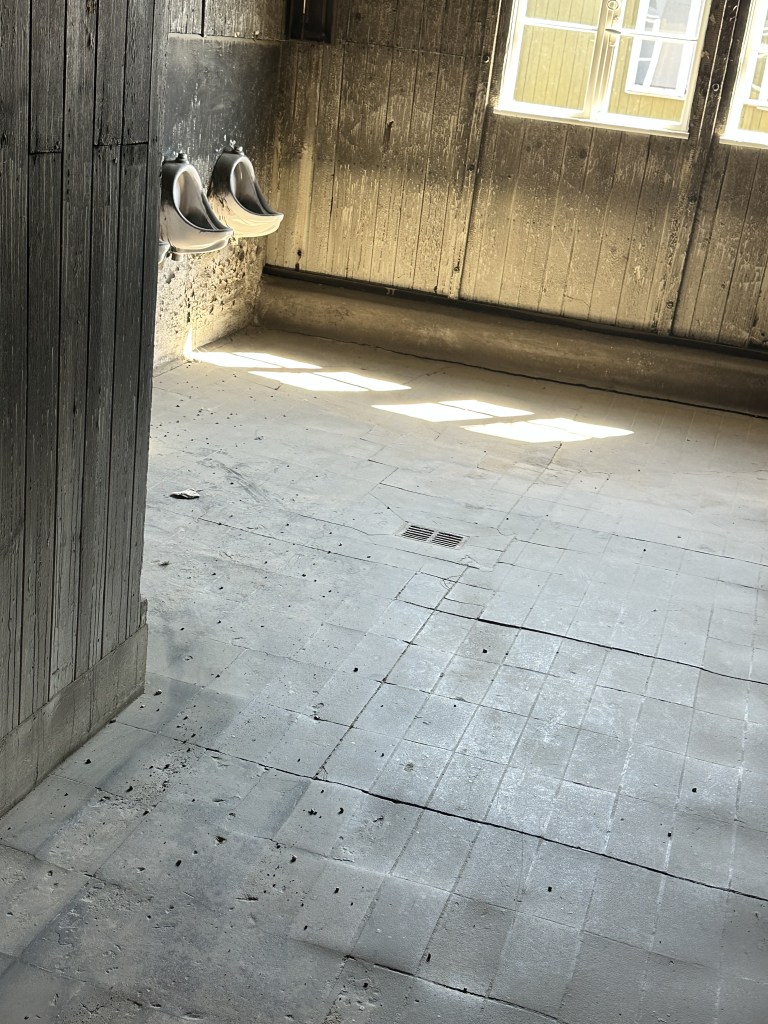
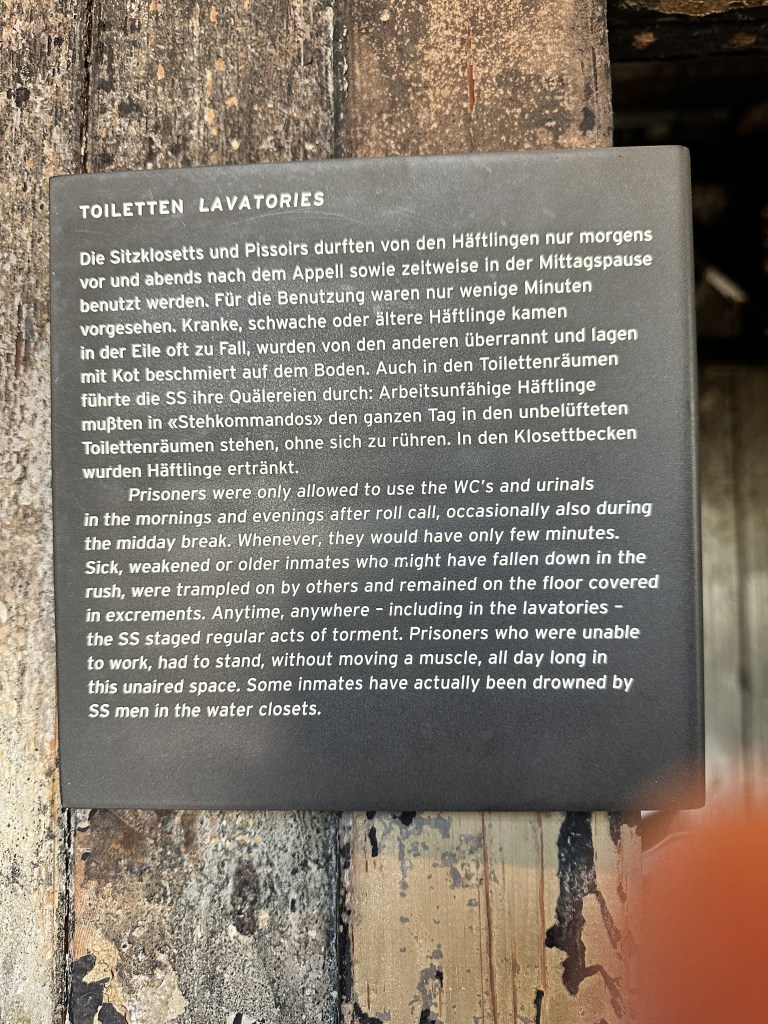
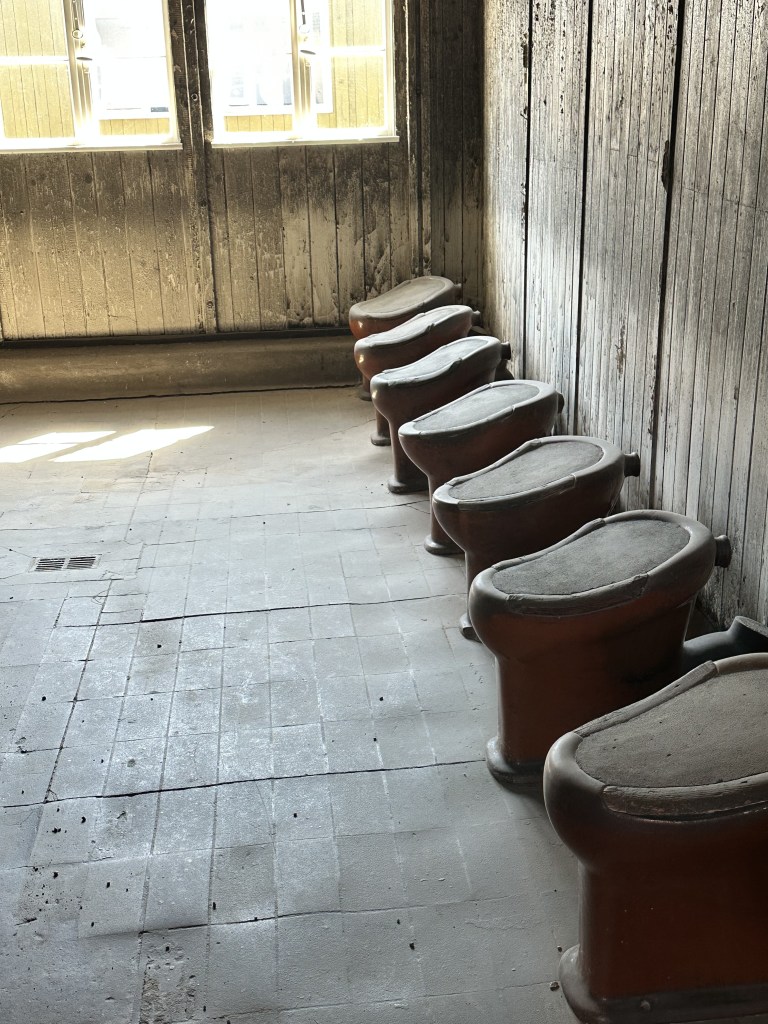
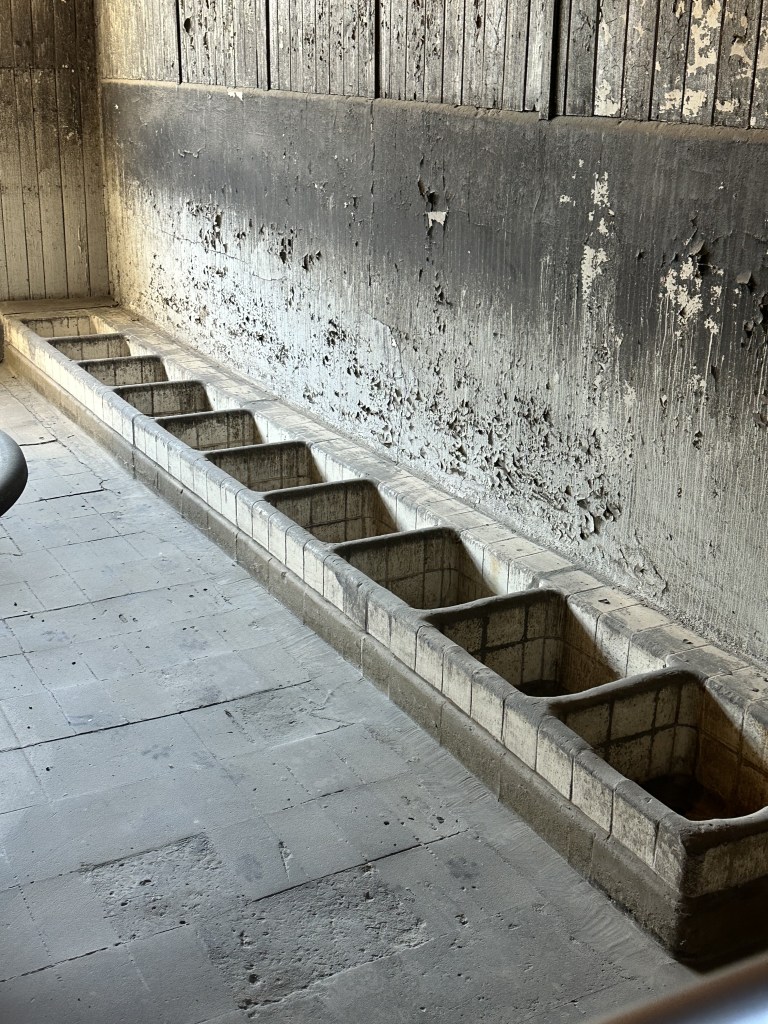
The toilets – shown above. These bathrooms could only be used in the mornings and evenings and about 300 to 500 prisoners would either be eating a breakfast or using the bathroom. They were all given only 30 minutes to accomplish this so some of them would miss out on using the bathroom. I cannot imagine such awful conditions to exist in and on top of that, no privacy.
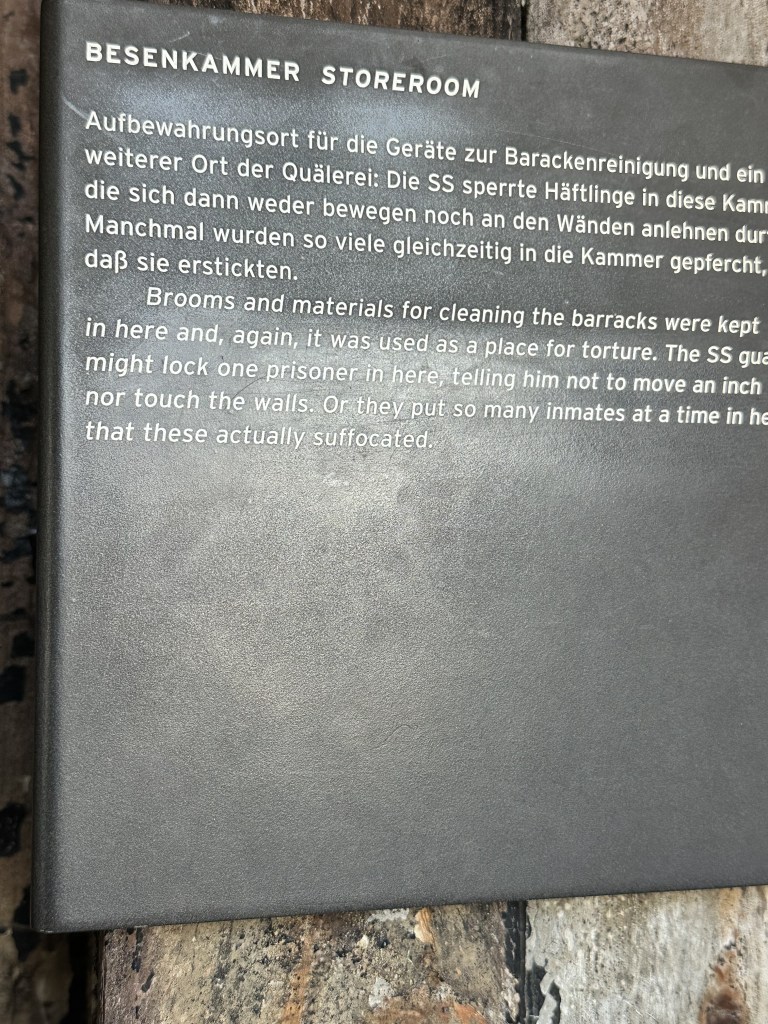
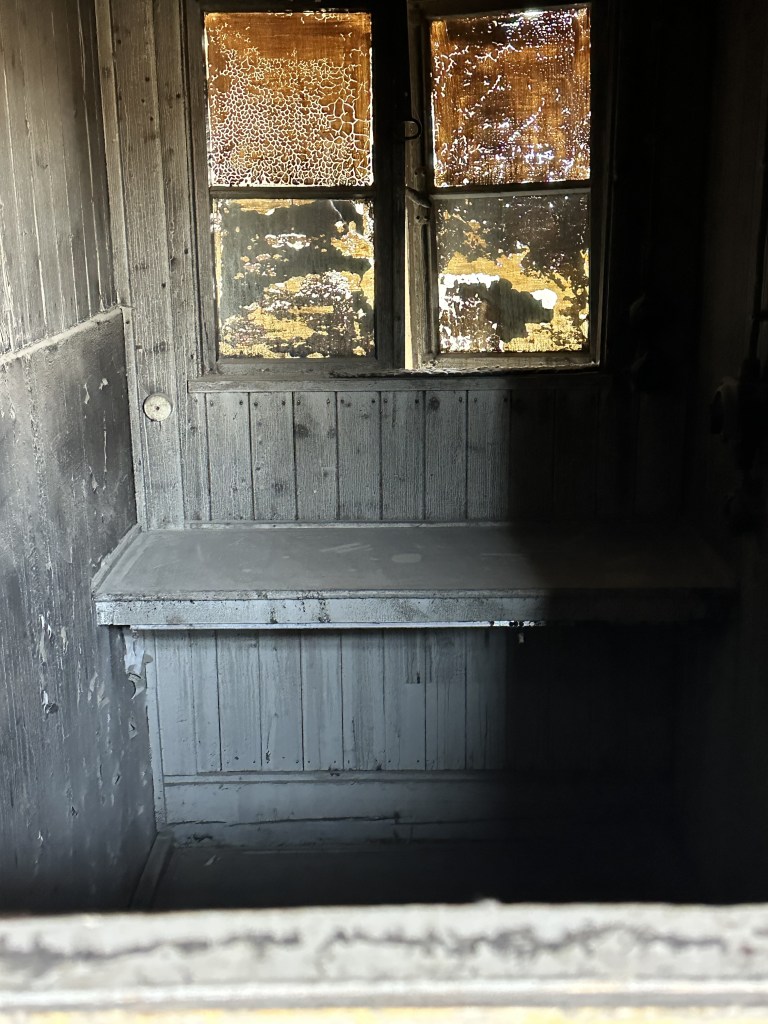
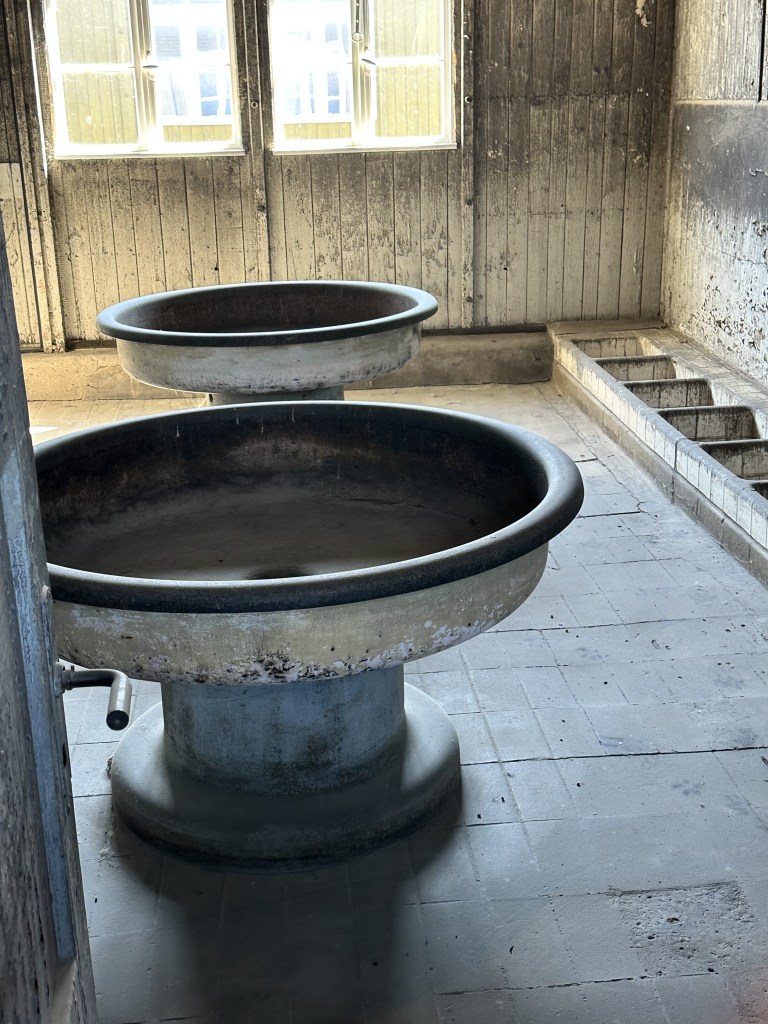
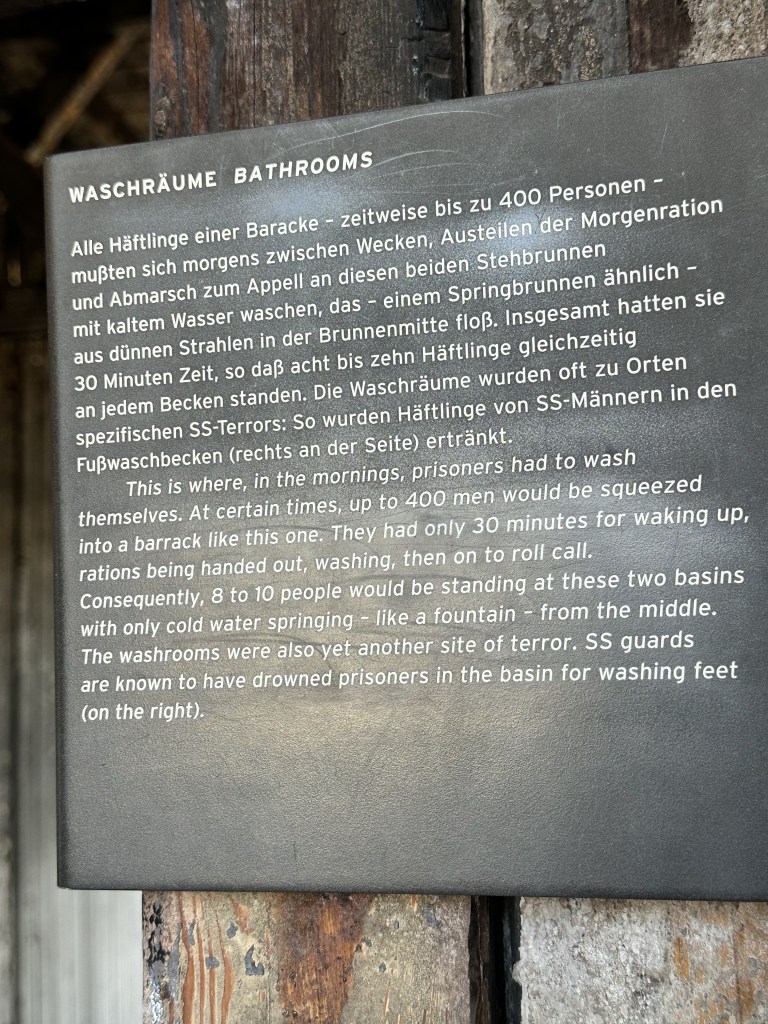
Above – the storeroom. This room was actually quite a small space – I could not imagine cramming so many inmates in this tiny room that they actually suffocated. … And then, the bathrooms (photos below.)
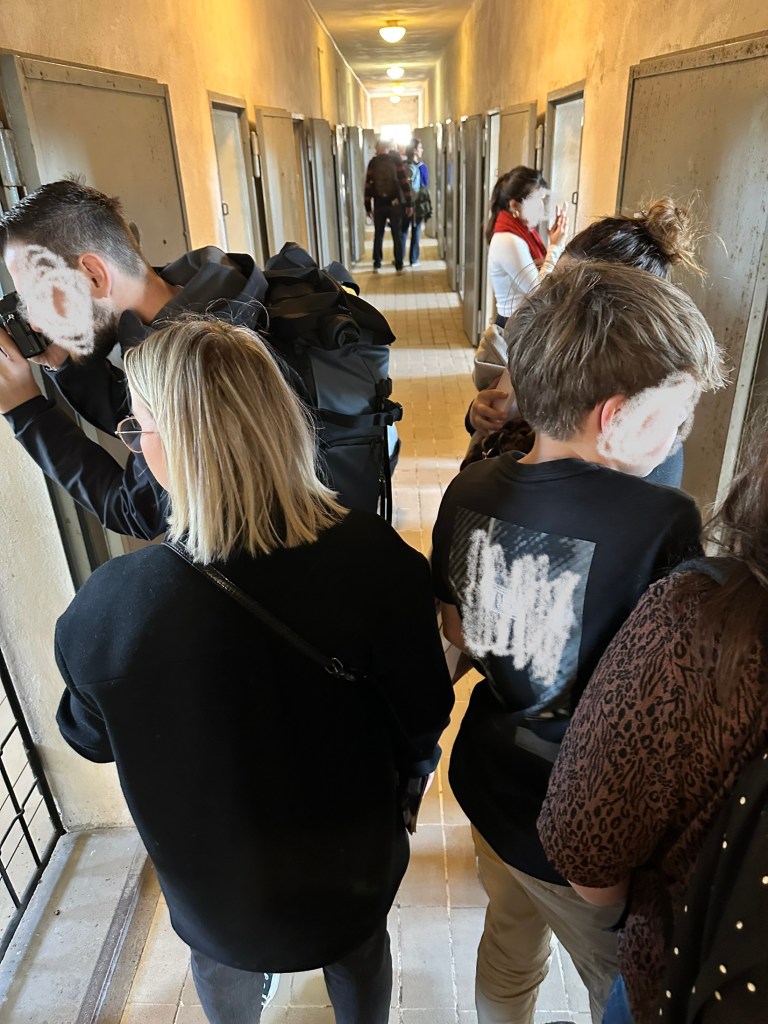
Then there was another building, close to Barracks 38 and 39 that was called the prison within a prison. In this building – see below – is where they held political prisoners, one of which was Stalin’s own son. We were told the the nazis tried to trade Stalin’s son for a German dignitary but Stalin declined and Stalin’s son remained at Sachsenhausen. In this building, each prisoner had their own cell.
You can see metal supports sticking out of the top of the wall (shown below) – electric wiring ran through these over the top, so if a prisoner attempted an escape, they would have been electrocuted.

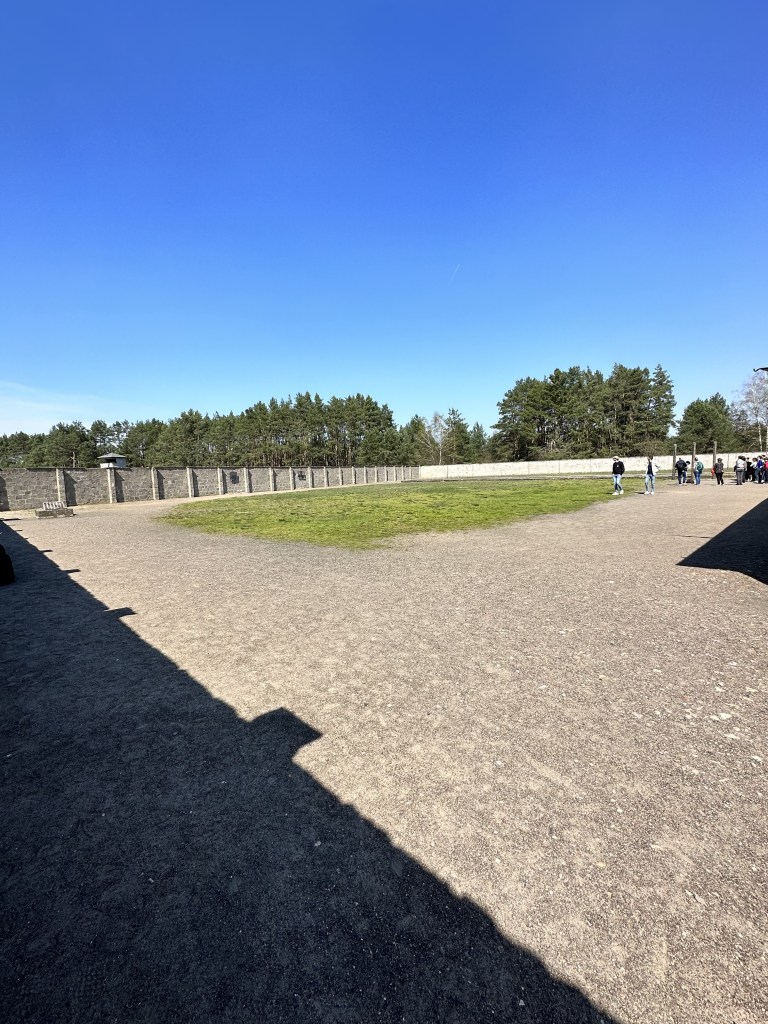
a prison

Another thing about this place. It seemed odd to me that it be such a beautiful sunny day at this place where atrocious things were carried out. There was a slight breeze that day which helped keep our bodies cool as we were not dressed for the heat – it reached 20C – and being from Canada and being April, it was too warm too soon for us and we neglected to bring enough water. There was no other life in this place other than the souls touring the place. You could hear the rustling of trees surrounding the camp and it hit me, you don’t hear or see birds at this place. No sign of critters like gophers or squirrels either (I’m not even sure Germany has gophers or squirrels.) At one point, I heard one bird but you could tell it was from way far off. What does it tell you when it seems that even the animals seem to be aware of what went on here? The place felt lifeless and it appeared to me that nature mourns what happened there.
More information about the conditions of the camp in those days can be be found here: https://encyclopedia.ushmm.org/content/en/article/sachsenhausen-conditions-in-the-camp
THE TORTURE
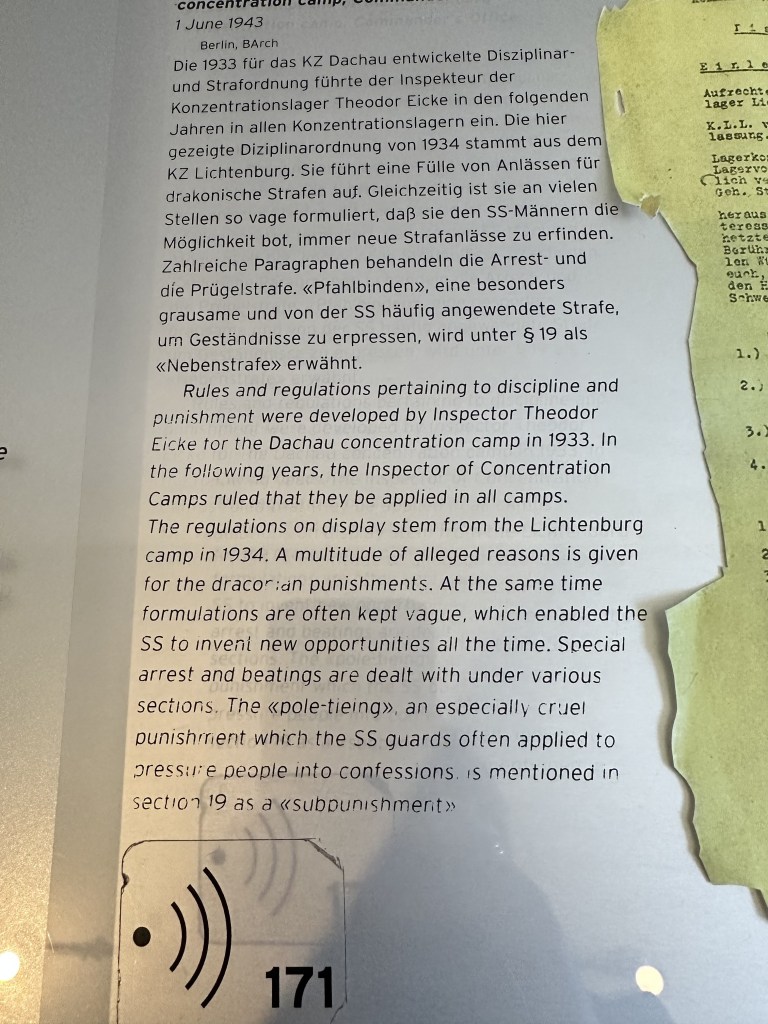
Pole-hanging … many did not survive this torture.
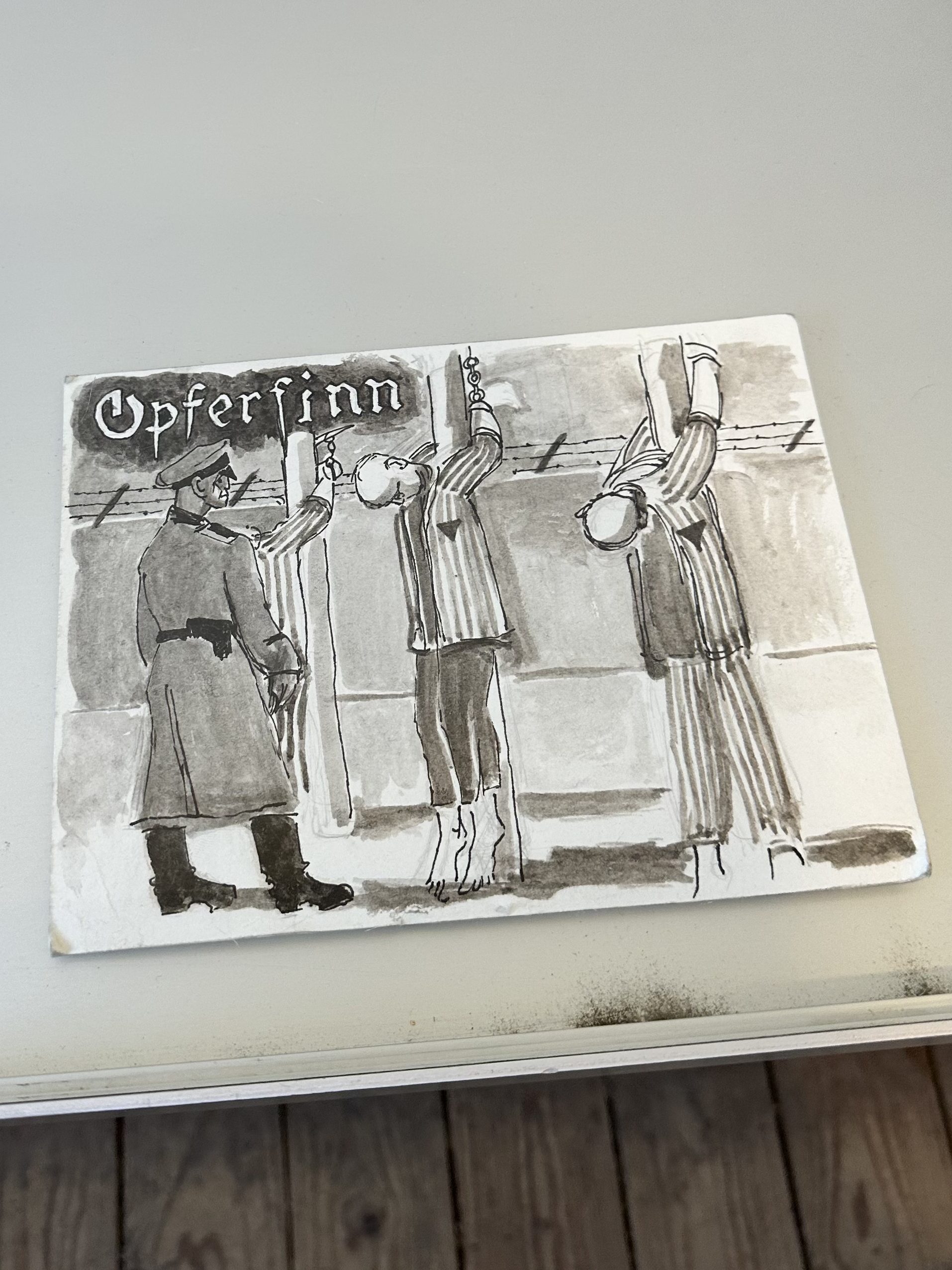
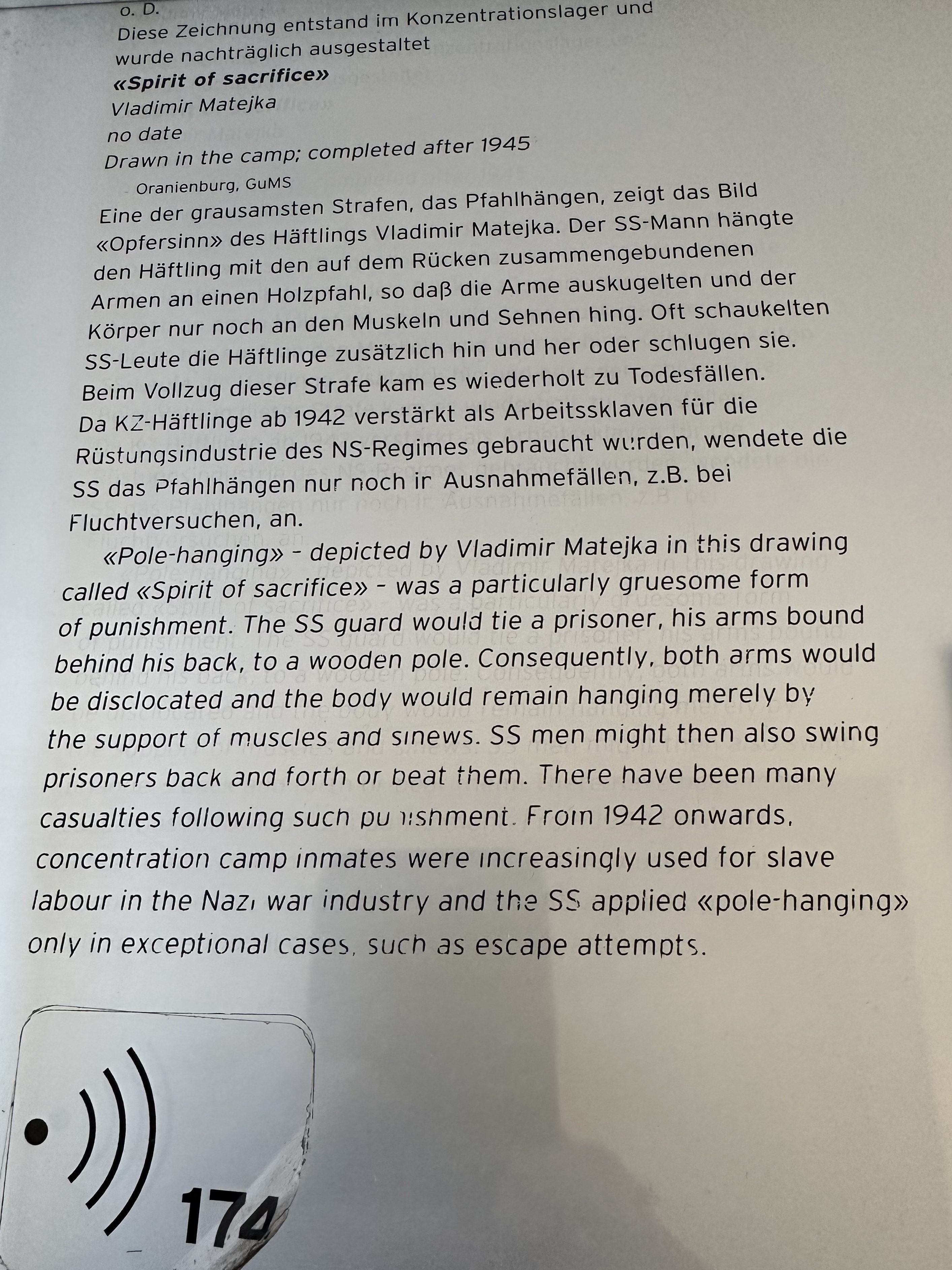
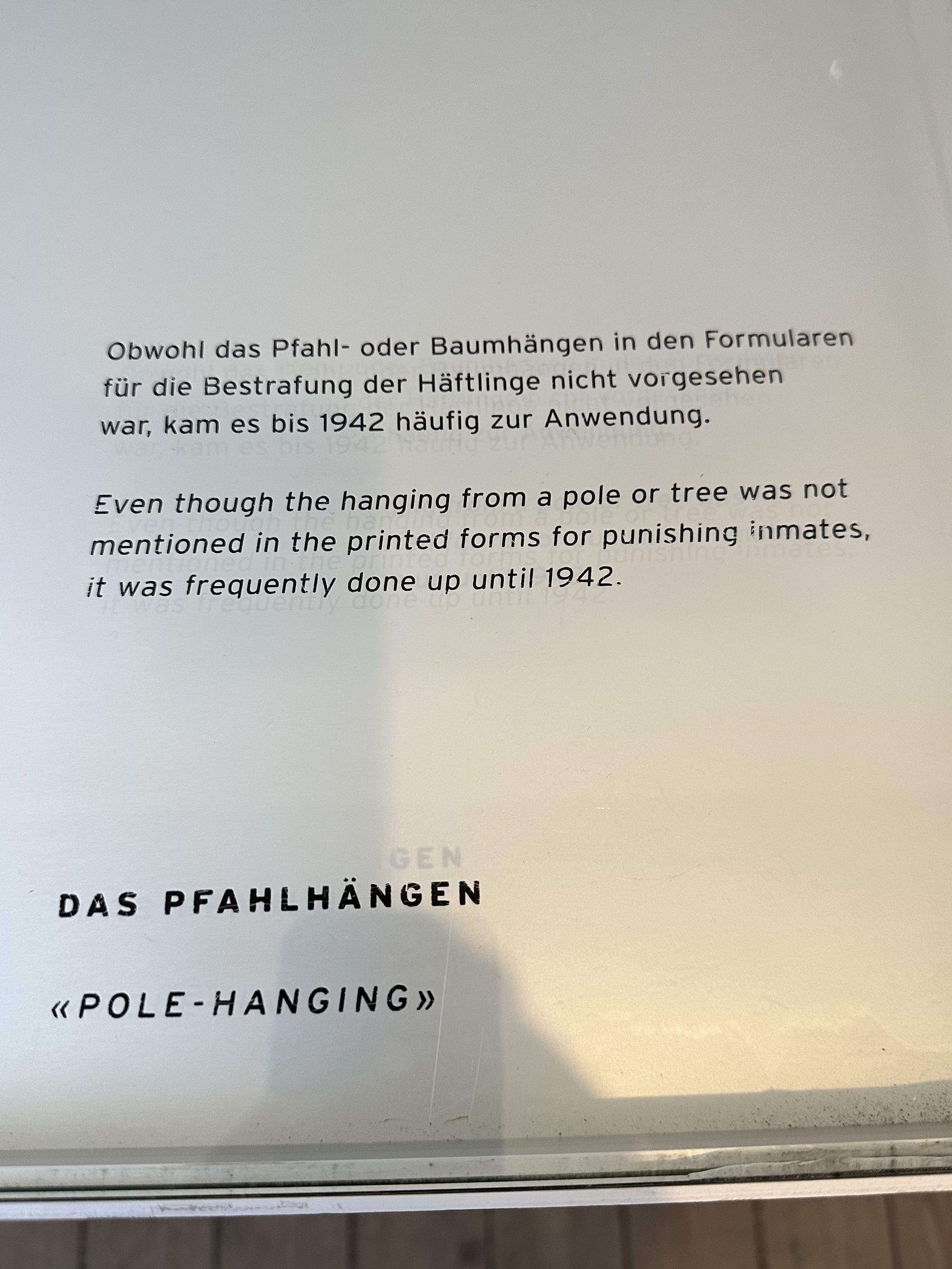
Trestle for Beatings …

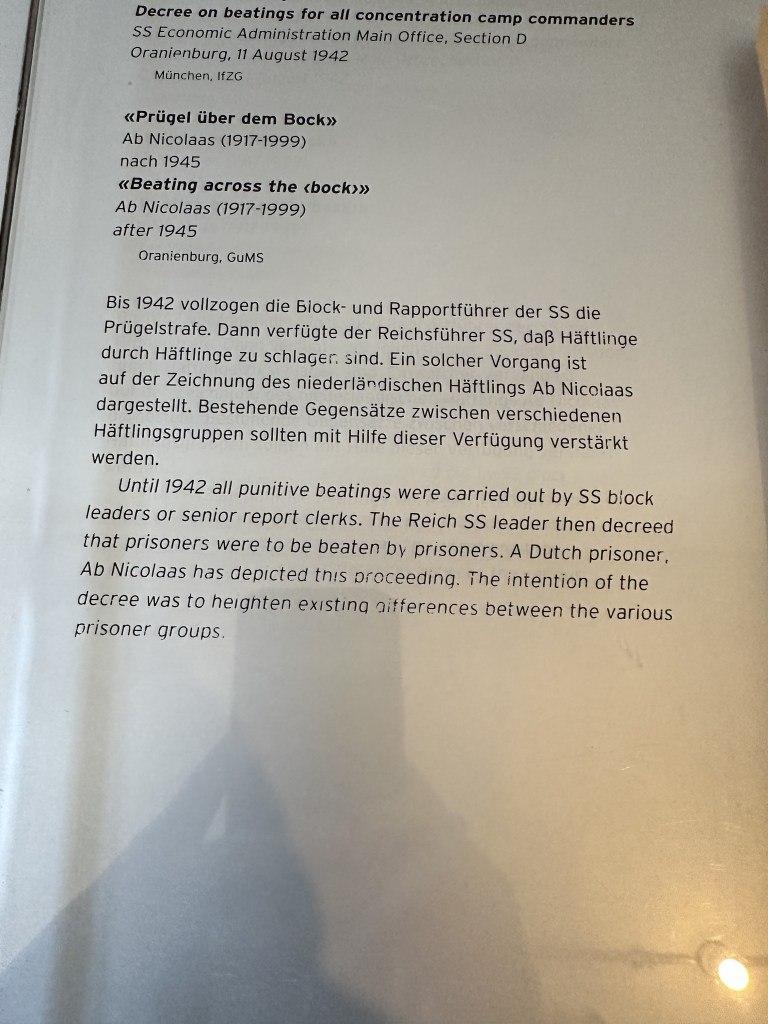
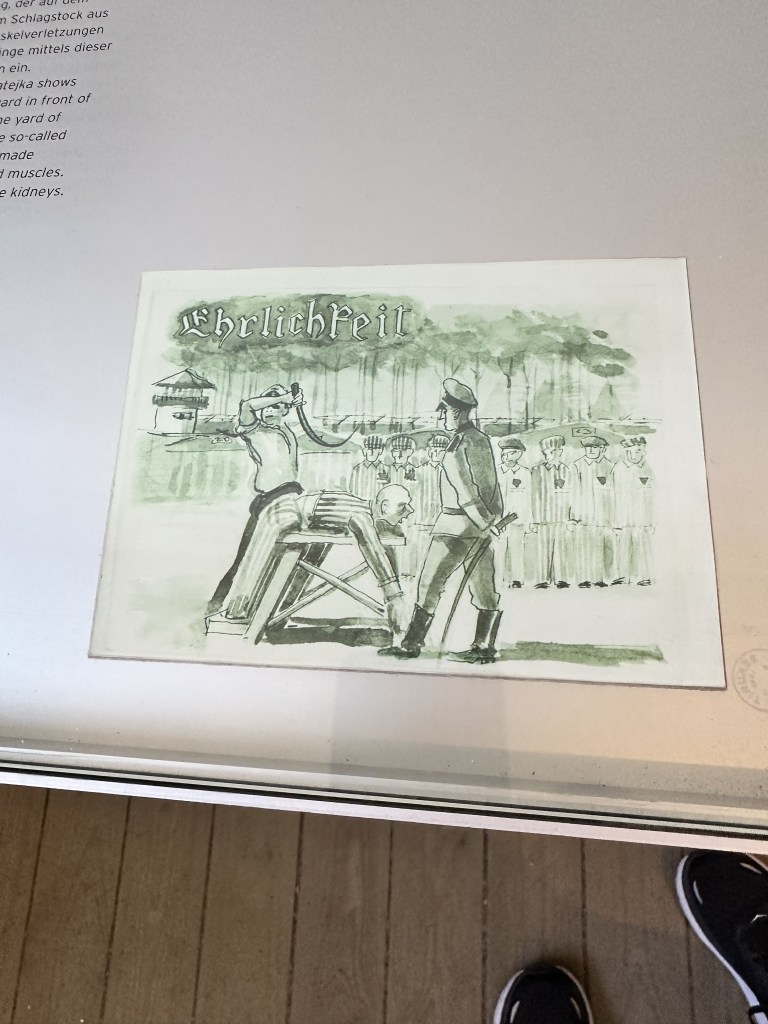
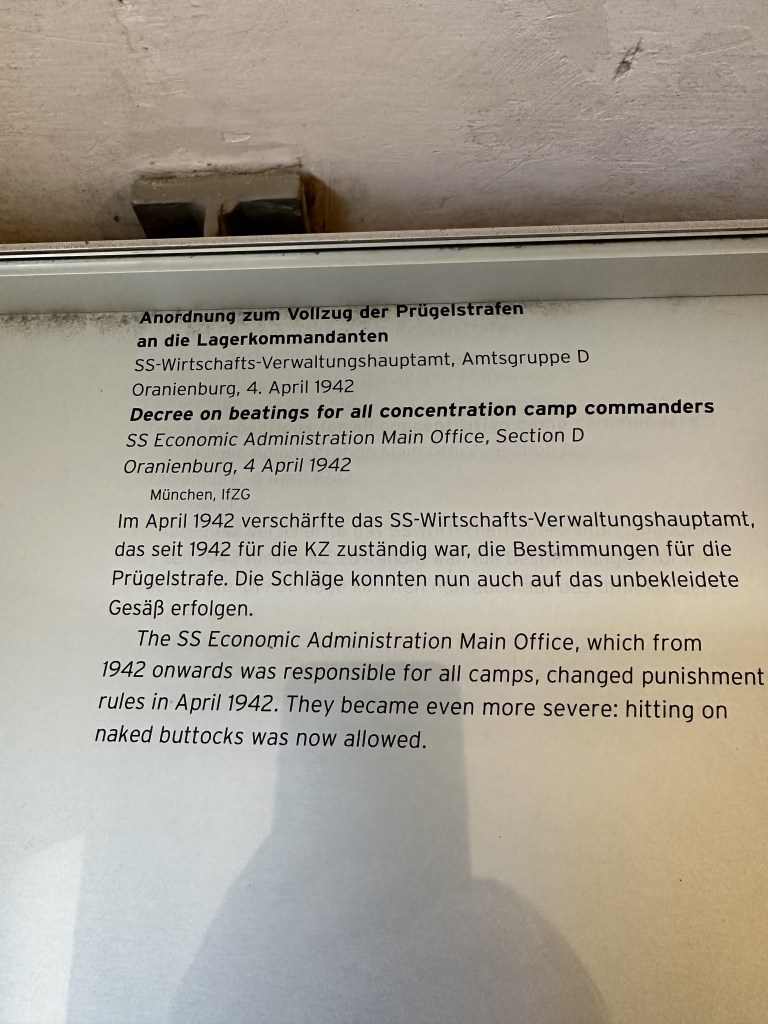

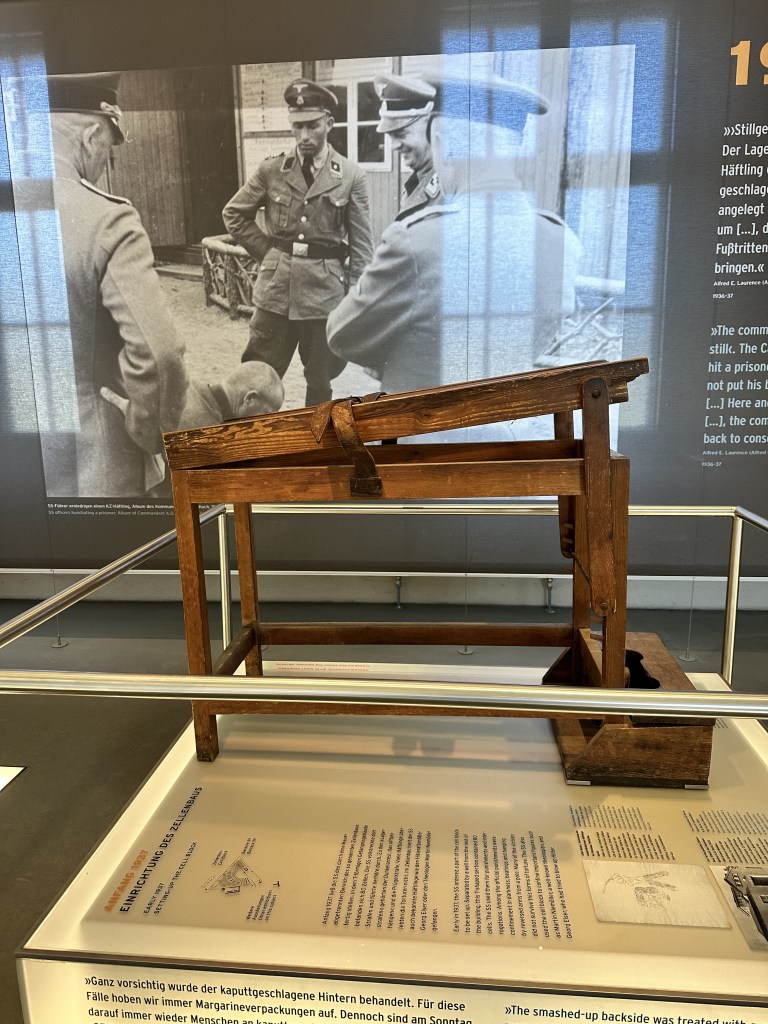
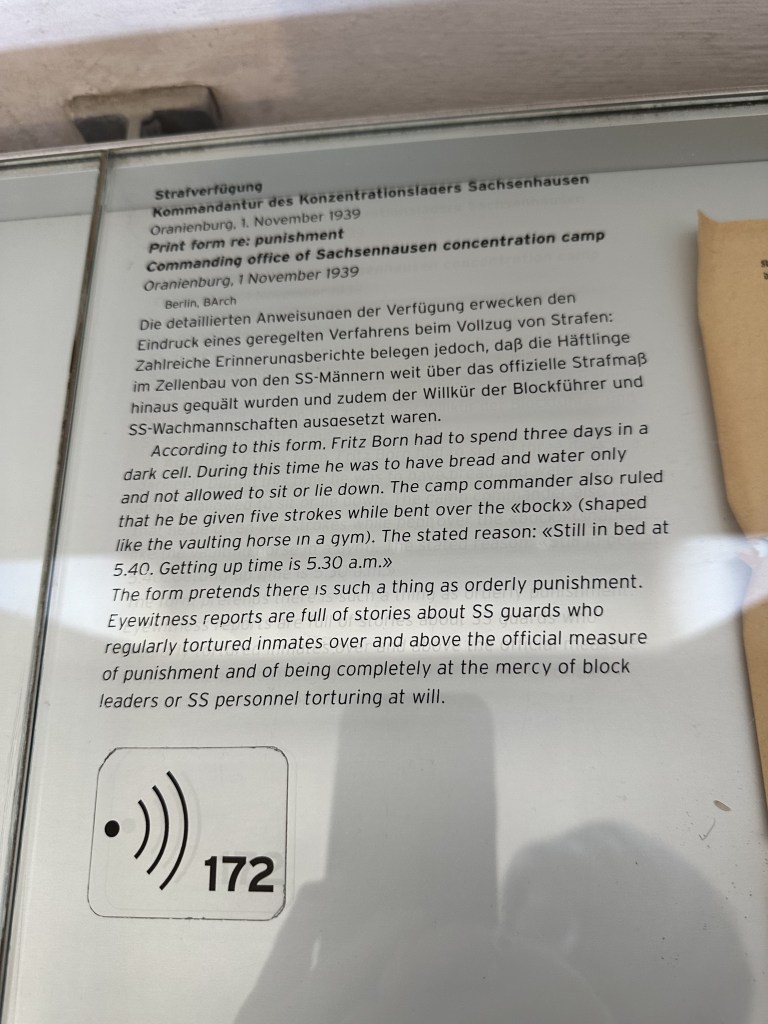
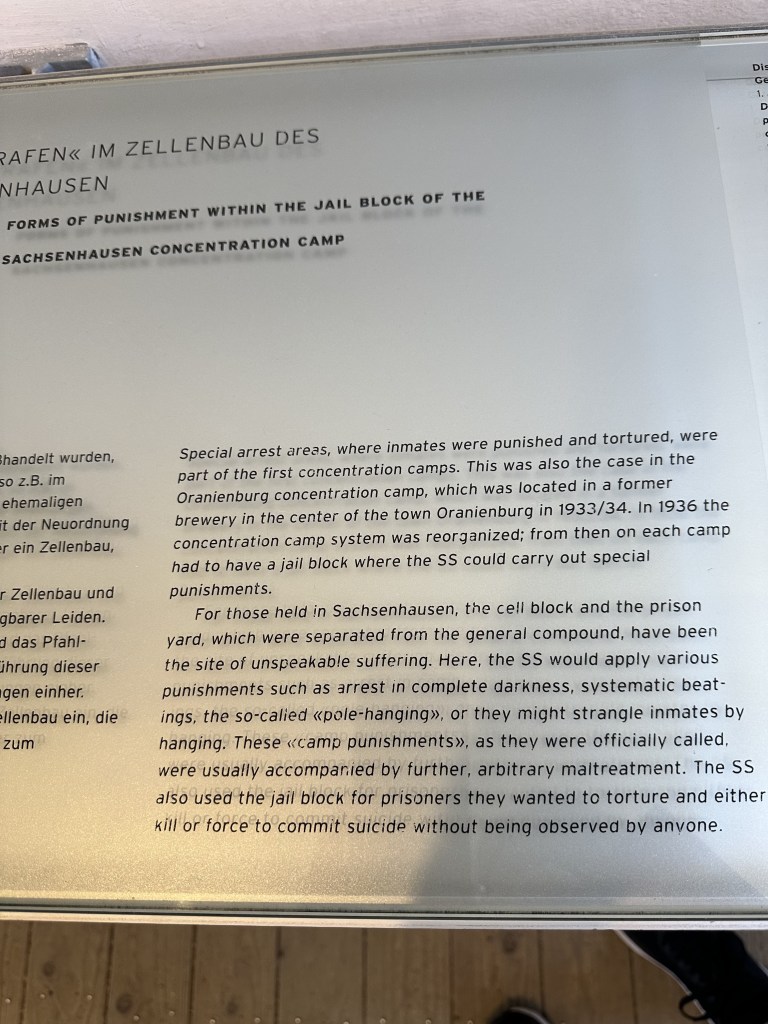
The beatings on the trestle were performed inside the cell block and later in the roll-call area. In 1942, they made other prisoners do the actual beating.
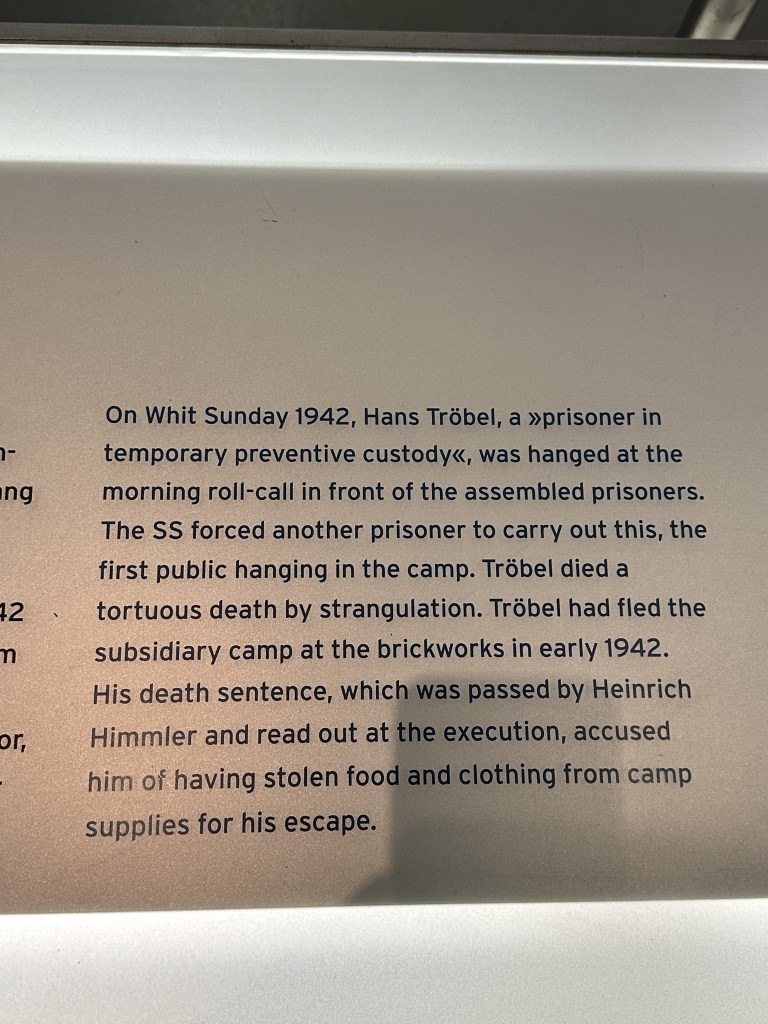
Hangings …


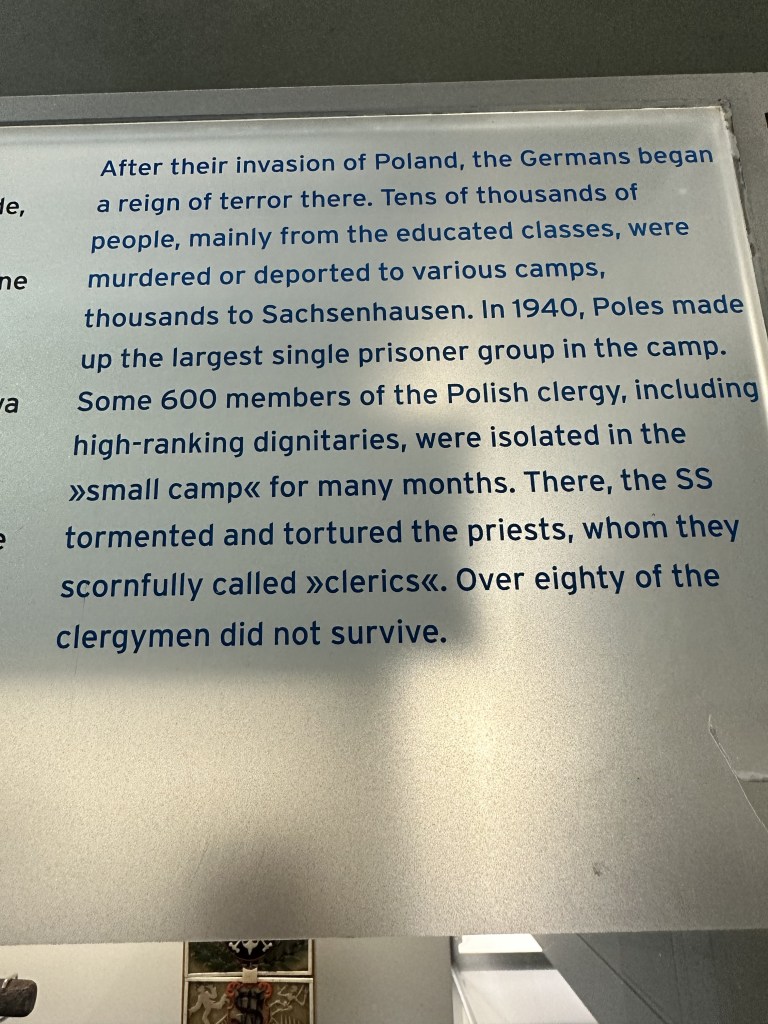
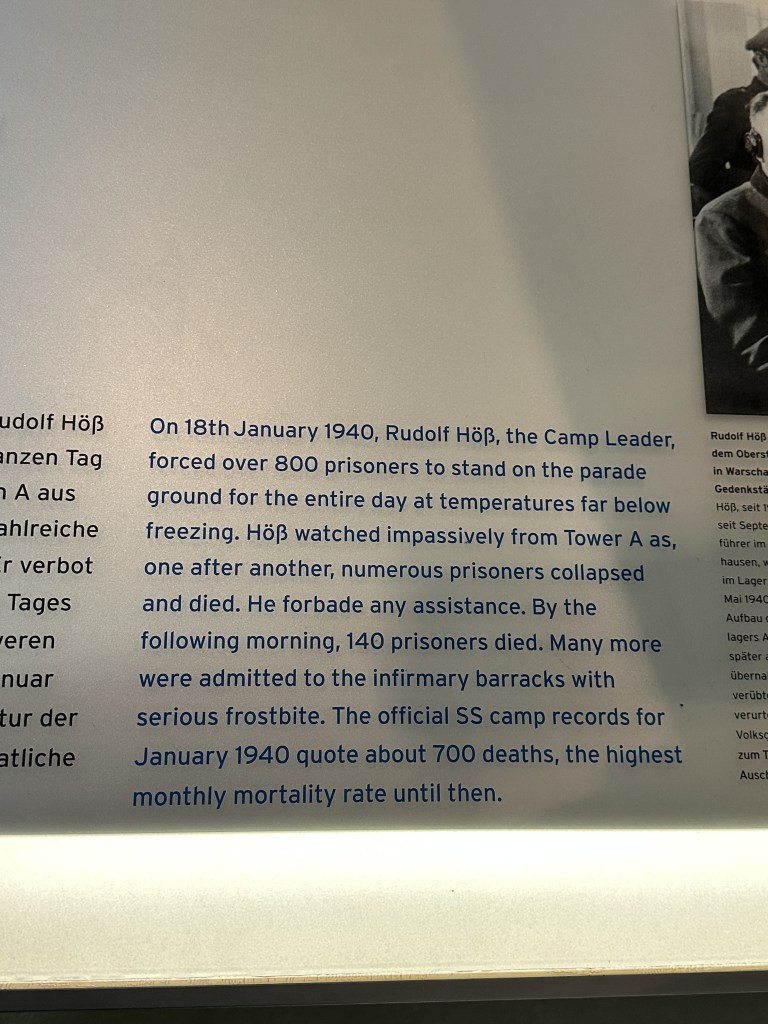
Other Tortures …
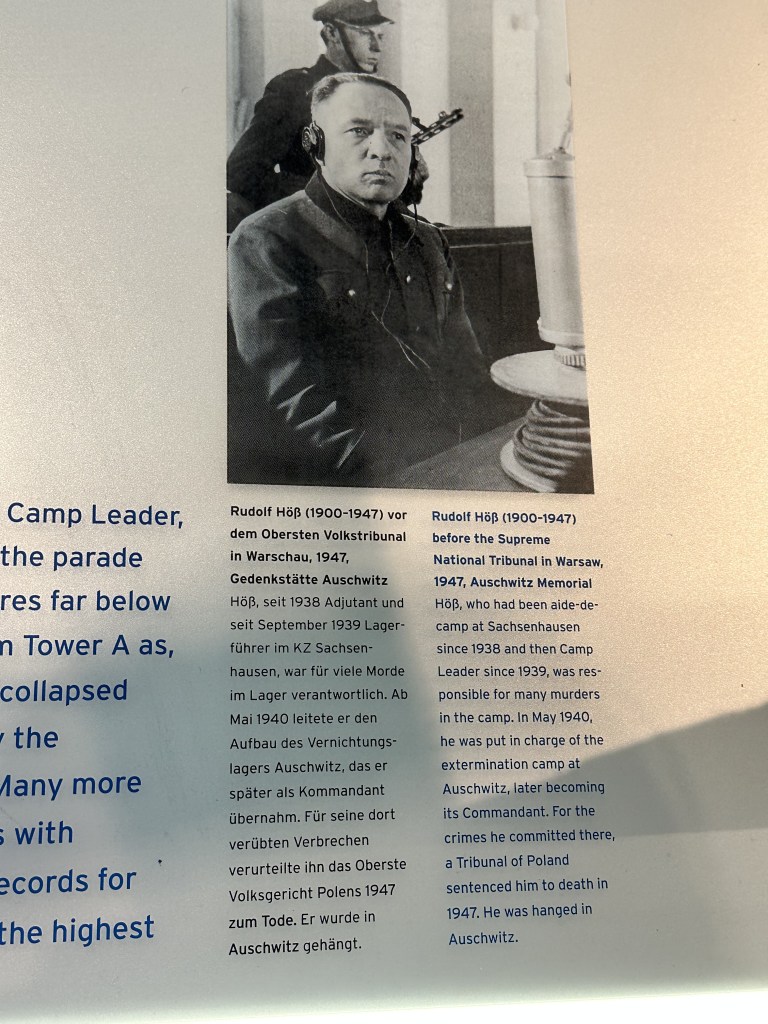
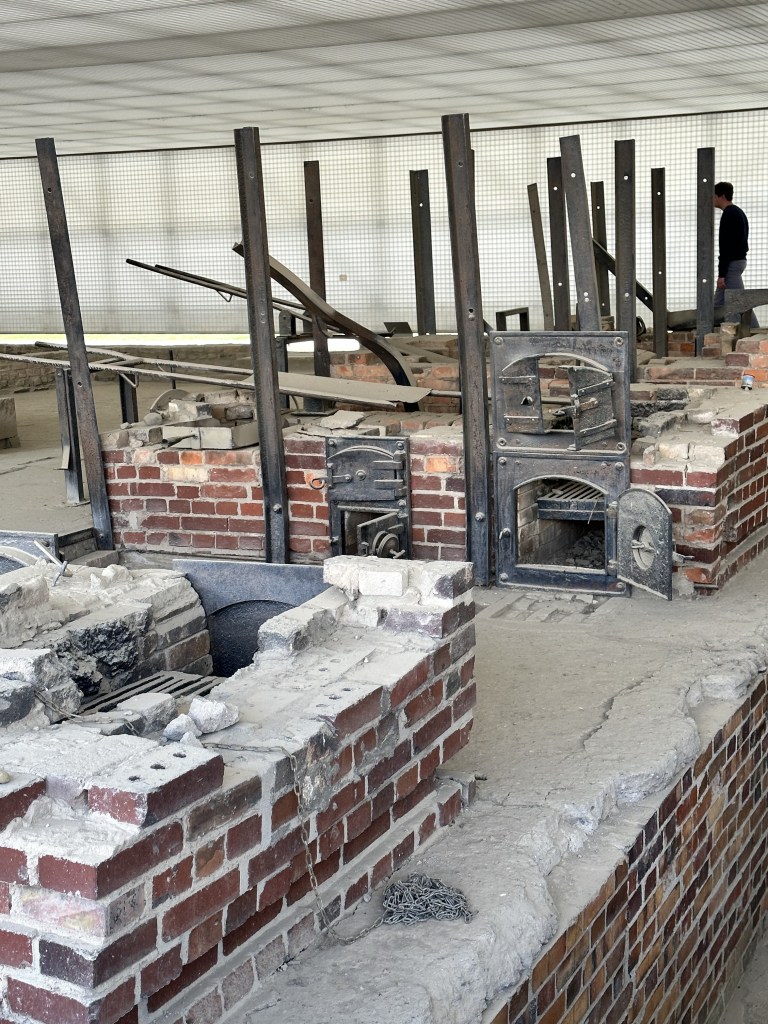
And then we were off to Station Z where a lot of mass murder took place.
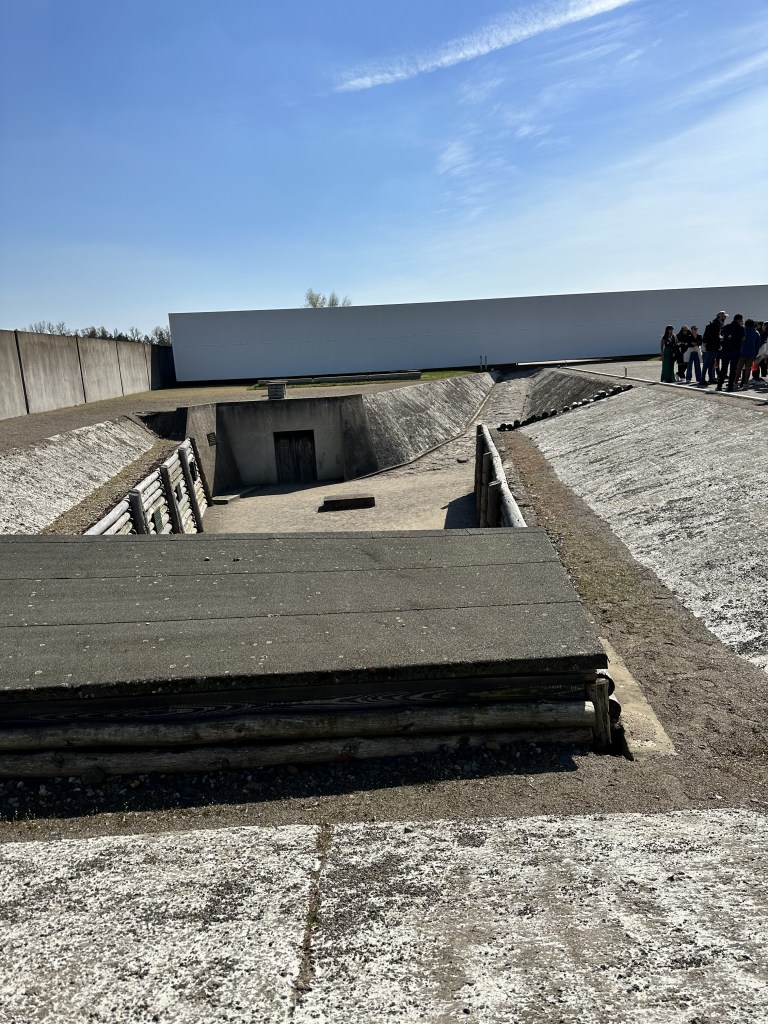
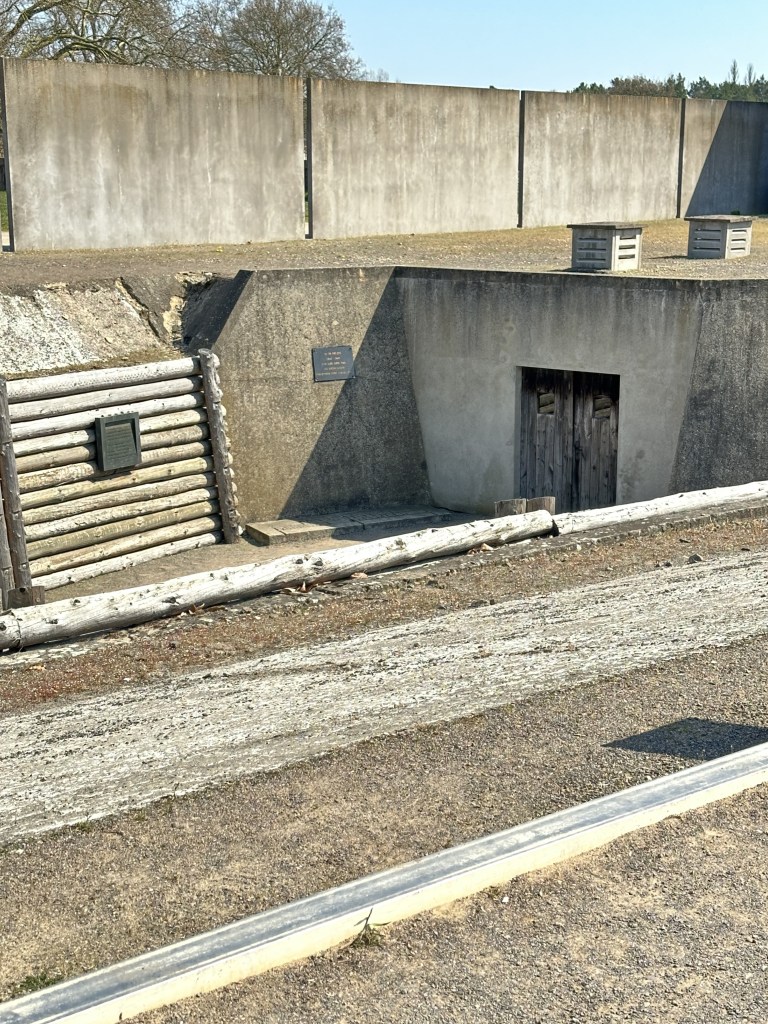
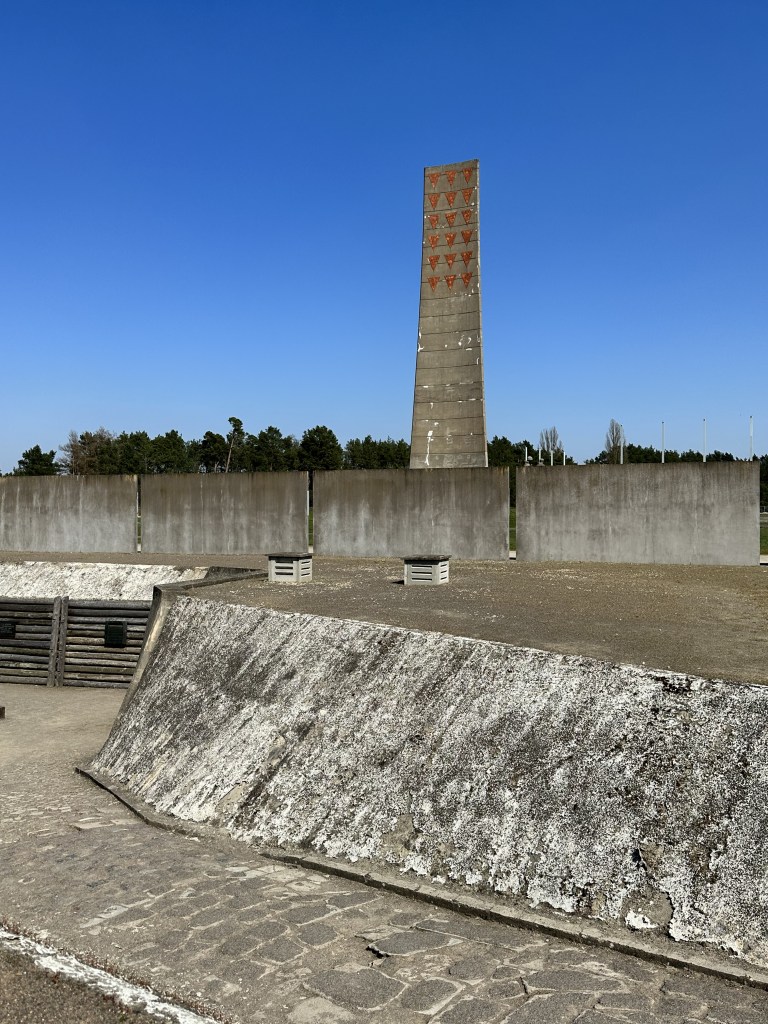
This facility was completed in spring of 1942 and called Station Z – the end of the alphabet to indicate ‘the last stop.’ Our guide had told us they initially lined prisoners up against the wood slatted walls in the trench and would shoot prisoners there which were then carried into the morgue and then on to the ovens. After some time the guards started to suffer mentally and started to go into deep depressions from all the killing. They then created rooms where the SS guards would dress like a physician and lead a prisoner to one of these rooms telling them that they are going to do a medical check on them, saying that they were going to measure their height. Then the guard would leave the room and another guard in the room beside it would open a slot in the wall that would be behind the prisoner’s head and a guard would shoot them in the back of the neck. This way the guard didn’t have to look at the prisoner in the face when killing them. This facility contained four crematoria and it had one gas chamber. The gas chamber was often used to murder women.
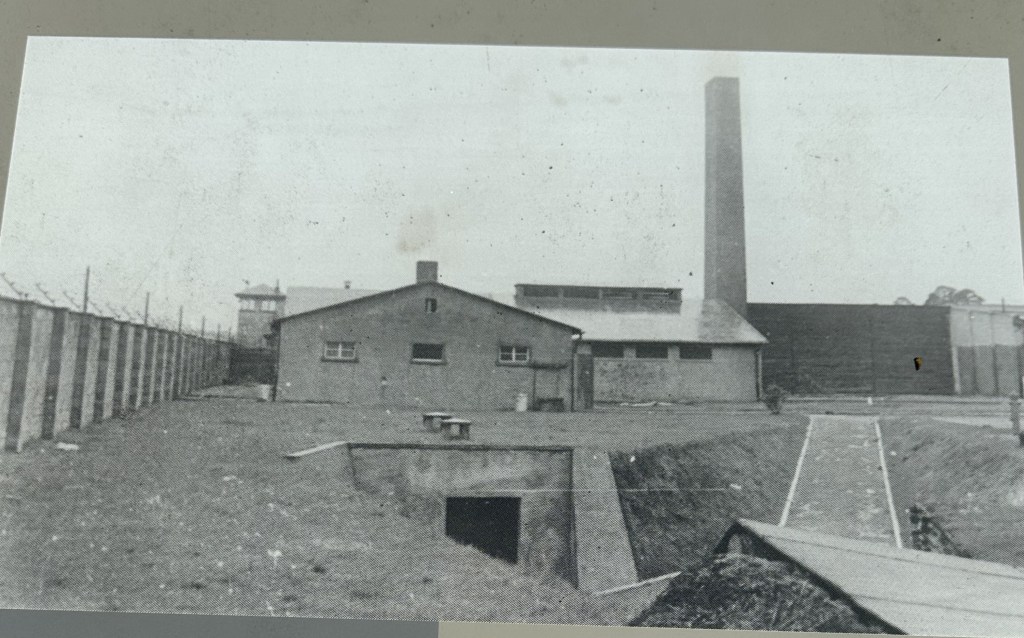

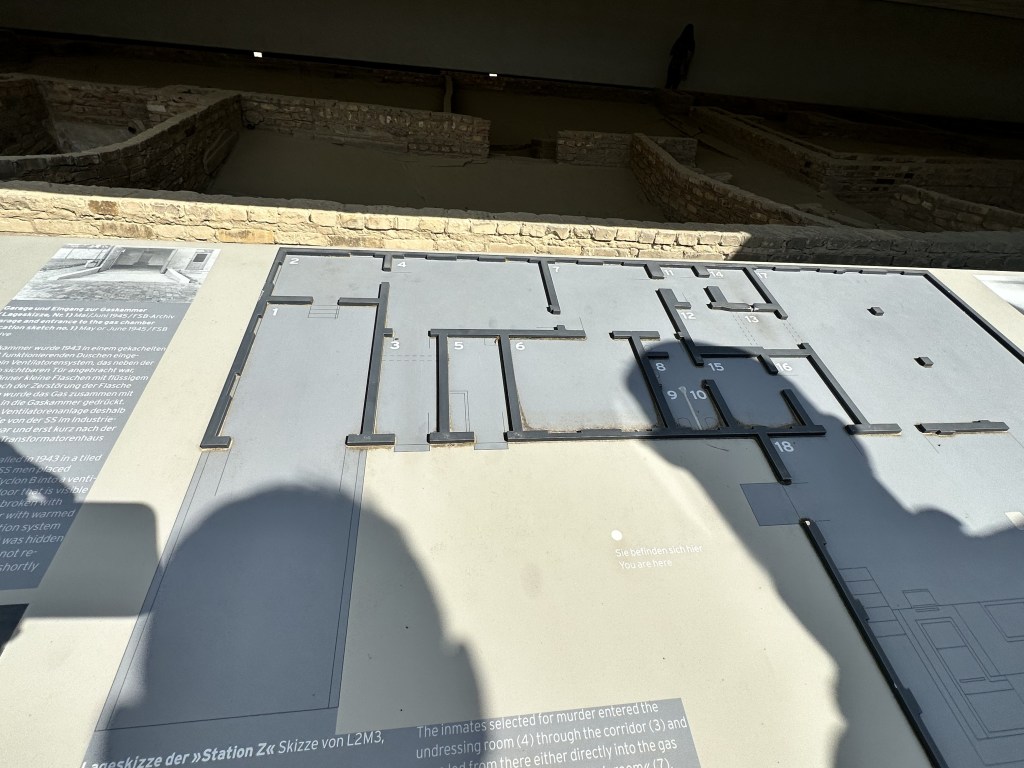
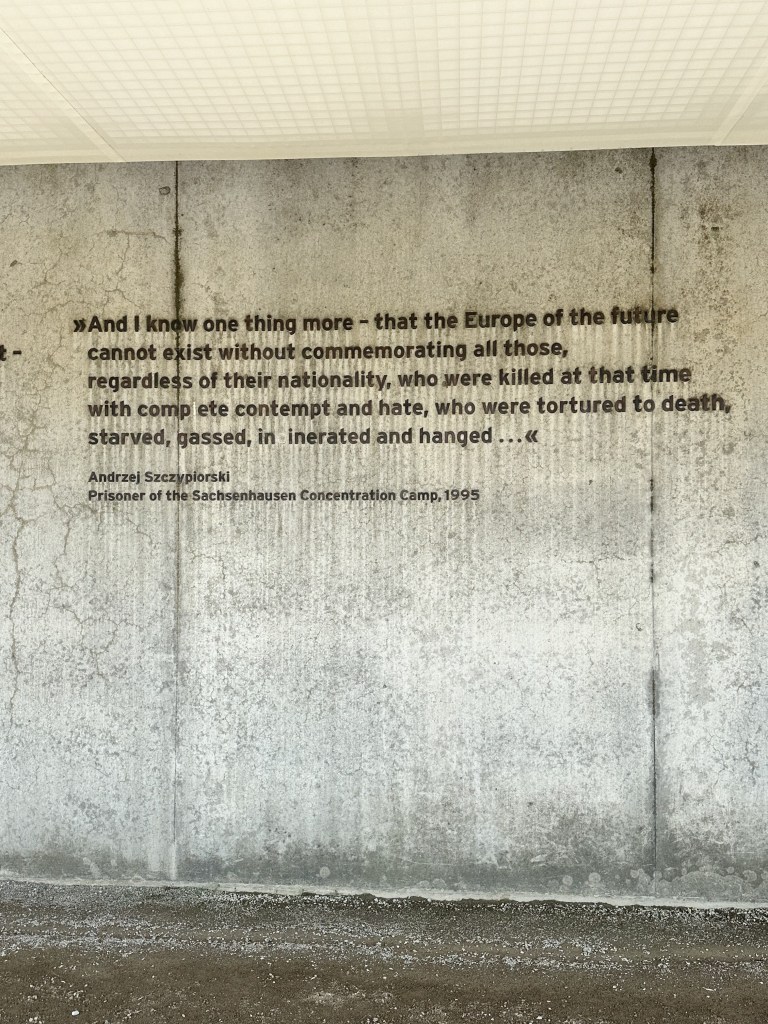
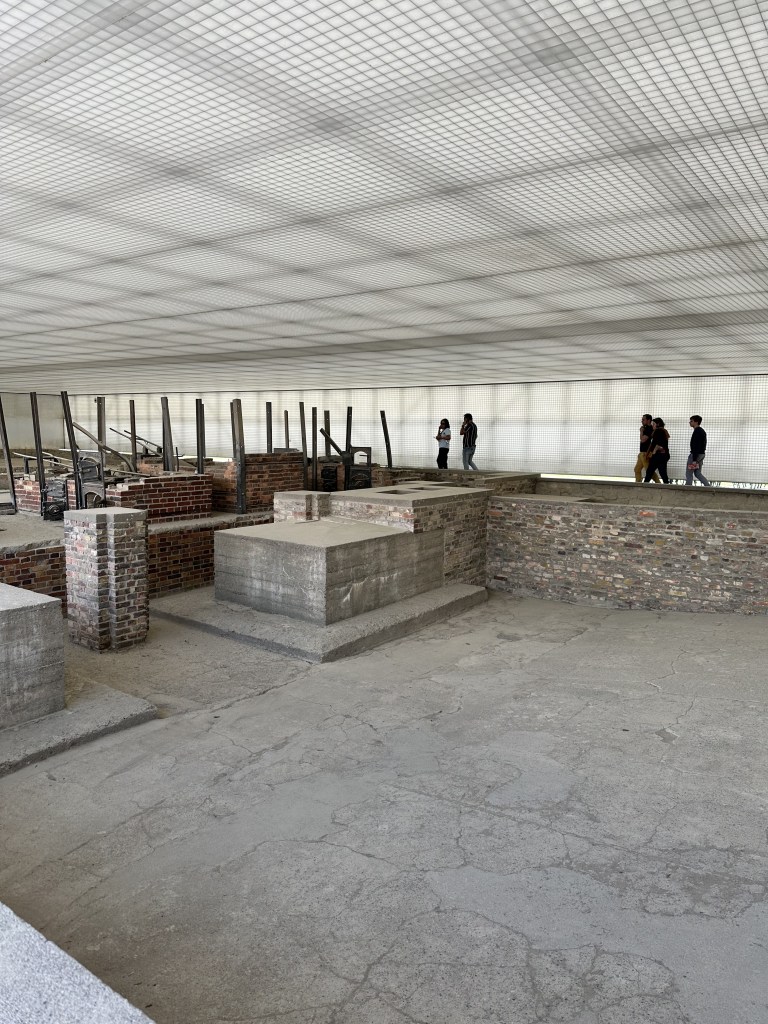
Below are two buildings where many medical experiments on prisoners were rolled out. Our guide informed us that the youngest recorded prisoner at Sachsenhausen was only 8 years old. He apparently survived. I recall our guide saying that really awful medical experiments were done here – here is a link to more information:
https://encyclopedia.ushmm.org/content/en/article/sachsenhausen-conditions-in-the-camp
By January of 1945, the prisoner population at Sachsenhausen exceeded 65,000 souls which included 13,000 female prisoners.
“There is nothing that injures human feelings so deeply as being forced to watch a fellow human being executed.” ~ Heinrich Lienau, 1949, German political prisoner, Sachsenhausen, 1939 – 1945
footnote: The above is a quote from a book I bought at Sachsenhausen – “Sachsenhausen Concentration Camp 1936 – 1945 Events and Developments” written by Günter Morsch & Astrid Ley (ed.) – pg 106. I highly recommend this book as it contains so much more information about Sachsenhausen.
Additional photos:
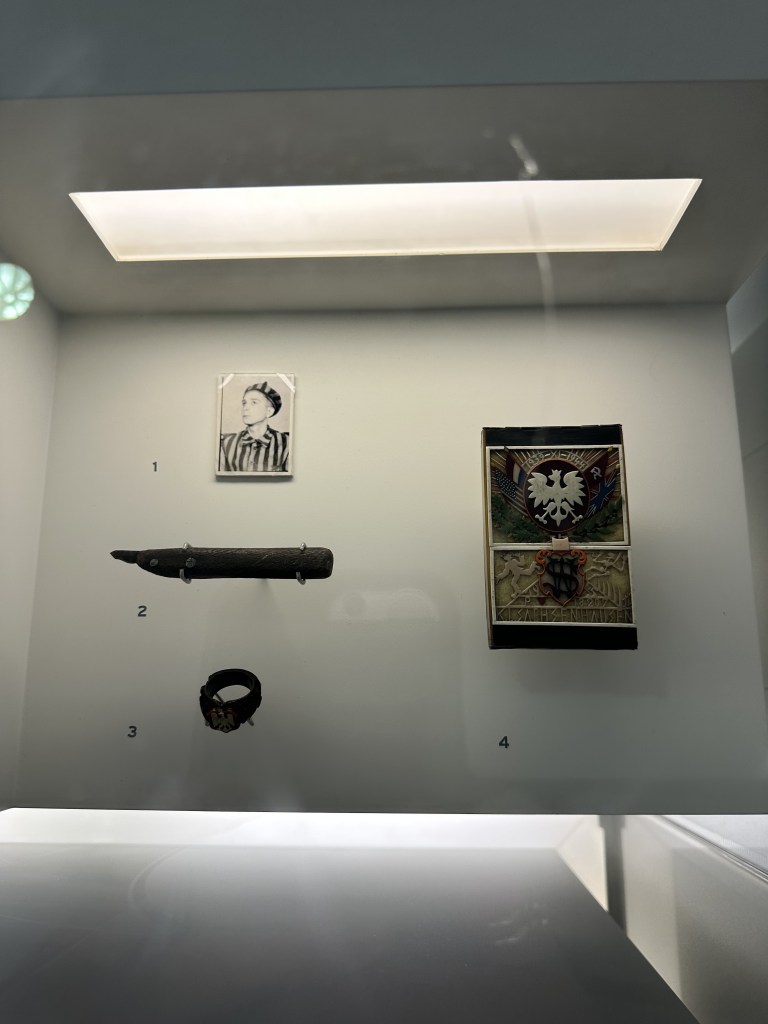
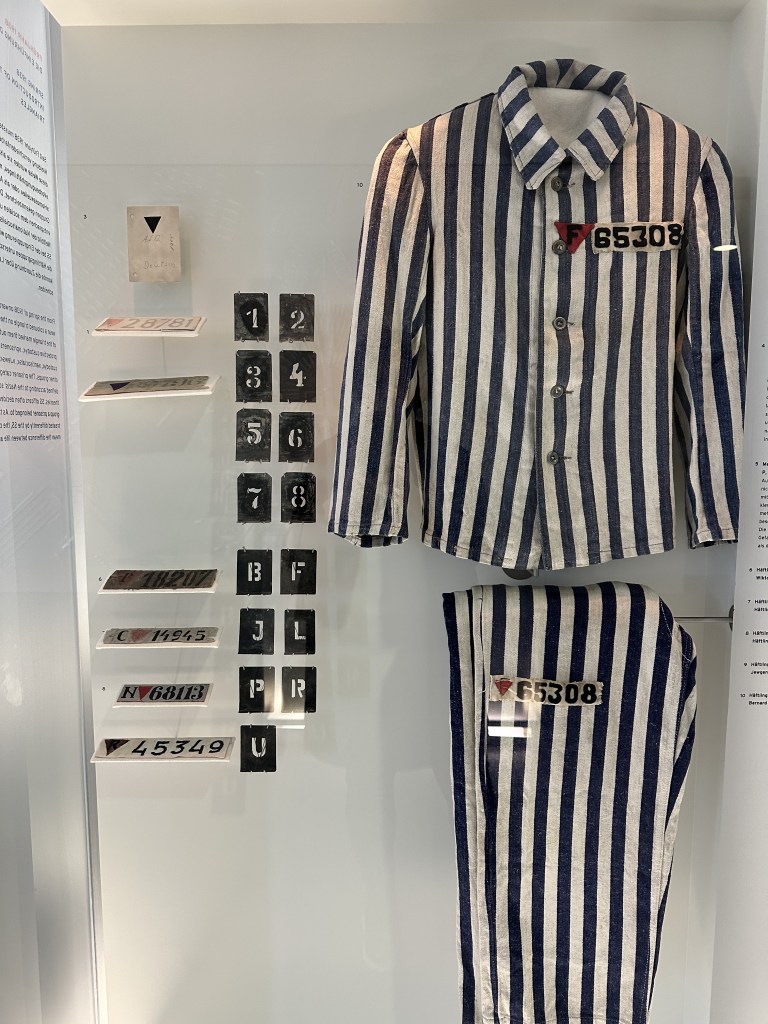
With these uniforms they had to wear, they were also made to wear wooden shoes. Wooden shoes were chosen because they are difficult to run in which meant that it makes it harder for prisoners to escape.
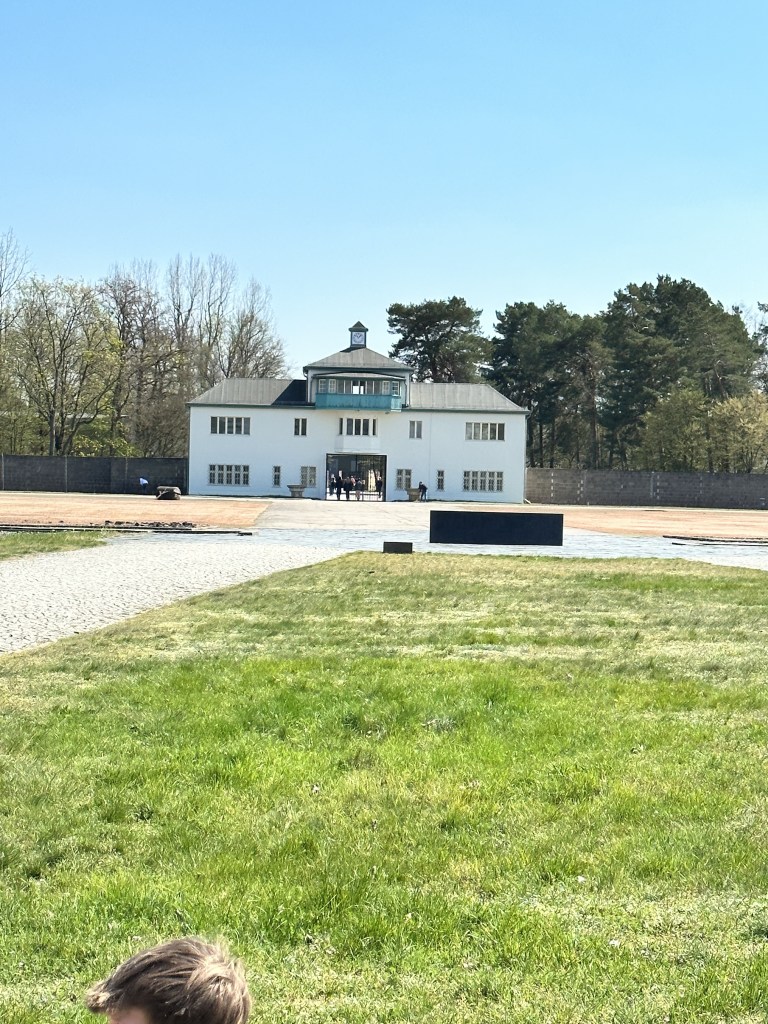
the middle of the yard opposite Building A
It was quite an experience visiting this place. Other things I learned about was the amount of propaganda that was used. The SS would actually have propaganda photos taken. Our guide was telling us that they would show prisoners in coats with earmuffs and gloves for photos, showing them with shovels clearing snow off roadways. But when after the photos were taken, the prisoners were stripped of the winter gear and went back to clearing snow with their bare hands – no coats, gloves or ear muffs. Propaganda is a form of controlling information – of not letting the truth out. Propaganda keeps truth hidden and if you have media that controls information (which was also a thing in Hitler’s Germany), how easy is it for evil agendas to flourish?
In Germany, I learned that their police and military, as part of their training, have to go through Sachsenhausen and know its history so that this tyranny doesn’t happen again. It is something they take quite seriously. We were told a story by our guide that happened in Germany in recent years where tourists were caught photographing themselves at Brandenburg Gate doing the Hitler salute – they were arrested and escorted out of Germany and can never come back.
If atrocities like this happened once, they can happen again. So much of the last three years has awakened me to the fact that things like this could happen again and it disturbs me when information is controlled by media. They say history often repeats itself but rarely is it ever carried out exactly the same, but there are similarities. My daughter had read somewhere that in Hitler’s Germany, the people were given government issued radios and were not allowed to listen to any radio except the one government station. If they were caught listening to outside sources it could mean incarceration or death.
Did you know that during this time that the Jewish people were not allowed to own vehicles and eventually could not own bicycles either? They had curfews and could not go to places like theatres. They weren’t even allowed to own pets.
When thinking about this history, I remember when my daughter was in high school and her Social Studies teacher decided to play the movie, ‘Schindler’s List’. Her teacher asked the class how many had seen the film and only my daughter and one other student had raised their hands in affirmation. My daughter told me that she was surprised how many kids had not seen it and what surprised her further, is that as soon as the film started, the majority of their class averted their attention to their phones, paying no attention to a movie about one of the greatest atrocities in human history. I looked at my daughter and said, “This is how history gets forgotten. This is how they forget.”
The first time I saw Schindler’s List, I was so disturbed by it that I couldn’t talk for about two hours after the film because if I did, I’d start crying. It really rocked me. I have never forgotten it. This history cannot be forgotten and we have to recognize the tactics, especially the psychological tactics – like, how did they get such high compliance?
Another powerful film from 2015 based on a true story that took place during this era is called, “Woman in Gold” with Ryan Reynolds and Helen Mirren where Maria Altmann is quoted in the film as saying, “People forget, you see … especially the young.”
It is a dangerous thing to forget history or be ignorant of it because it could mean our demise if we do.
Never forget.
~ Risé Brette

 The Weary Traveller